
This article belongs to our Herbarium — a library of what past traditions believed about the great herbs of the Work. It records history, not advice: we describe what herbalists of other centuries did and thought, and we make no claims of our own. Nothing here is a guide to use.
The dream in the plague year
The legend is told across northern Europe with small variations and one constant: in a year of pestilence, an angel appeared to a monk in a dream and revealed a plant that would stand against the dying. In some tellings the angel is Michael, in others Raphael, the healer among the archangels; the monk and the monastery move from country to country as such stories do. The physicians of the Renaissance named the plant in that memory — Angelica archangelica, the angelica of the archangel — and the old apothecaries called its root radix Sancti Spiritus, the root of the Holy Ghost. By tradition the plant flowers around the feast of Michael the Archangel, which sealed the association: of all the great umbellifers of the northern gardens, this one belonged to heaven's soldiery.
What angelica is and where it grows
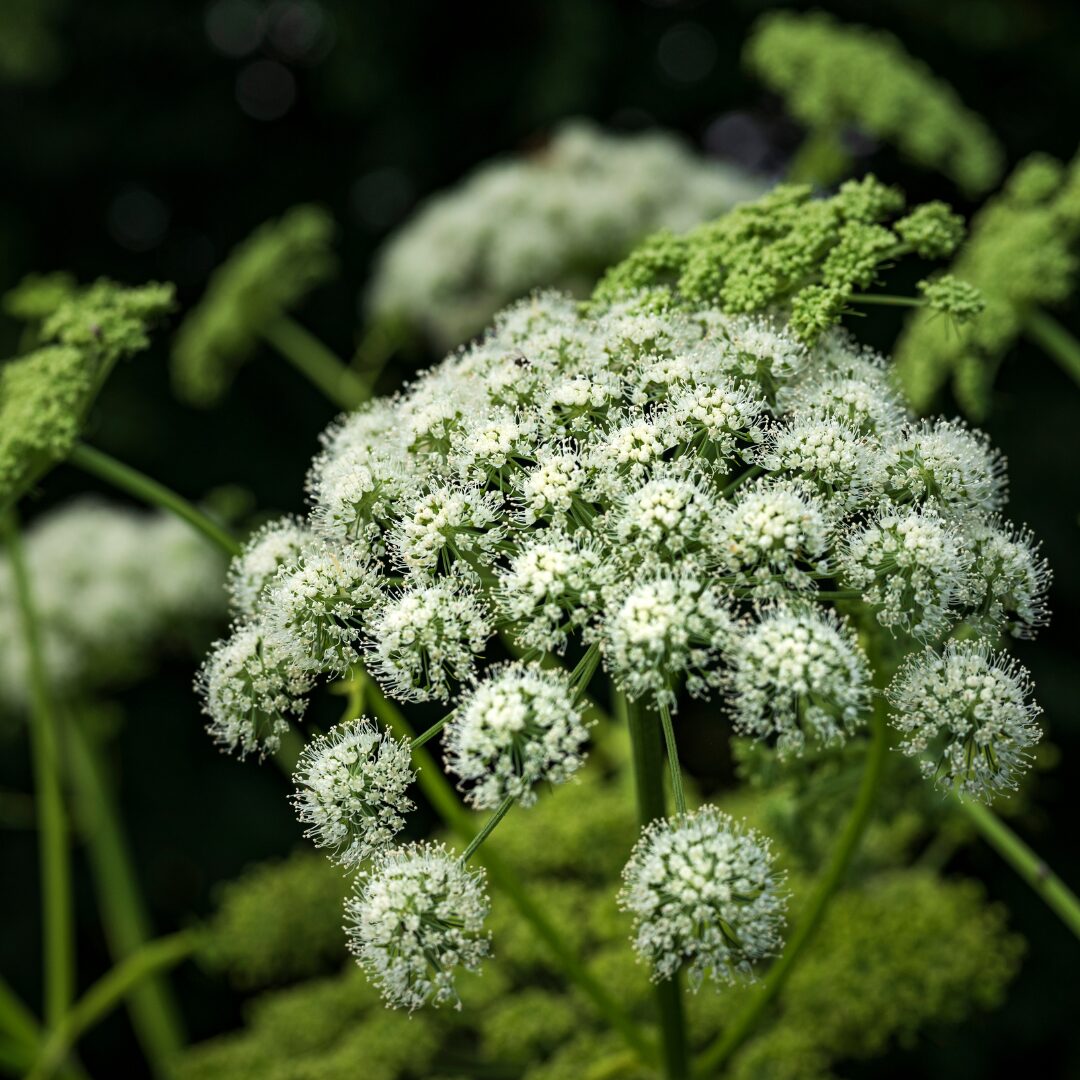
Anyone who has stood beside a mature angelica understands why the legend chose it. This is no modest pot-herb but a tower: a stout, hollow, fluted stem rising to the height of a man and above, crowned with great spherical umbels of green-white flowers, the whole plant aromatic from root to seed — a warm, musky sweetness unlike anything else in the northern garden. It is a plant of the cold lands, at home along the riverbanks and damp meadows of Scandinavia, Iceland, the mountains of central Europe and the north of the Continent generally. Like many of the great umbellifers it spends its strength in one flowering: the plant builds its root for a year or more, sends up its great stem, sets seed, and is done — a life spent, the old writers might have said, the way a candle is spent.
The herb of the north
Angelica is one of very few herbs the cold North gave to the European pharmacopoeia rather than received from the Mediterranean. The Norse lands cultivated it centuries before it traveled south: in Norway and Iceland it was garden property valuable enough to be protected in early law codes — a man's angelica patch had legal standing — and the Sami peoples prized the plant as both food and physic. The stalks were an article of northern trade and the plant a cultivated crop when most of Europe's herbs still meant the warm south.
When angelica reached the herbals of the south, its reputation came with it, and grew. It was believed to guard against pestilence and poison, to fortify the spirit in heavy times, and to gladden a fearful heart. In the plague centuries, angelica root was chewed, burned and carried; when the great plague visited London in 1665, angelica water stood among the official preventives published for the city, and the story is told that Paracelsus, passing through Milan in a plague year a century and a half earlier, had praised the root in the same office. Whatever else may be said, no herb was trusted with more.
What the herbalists wrote
The great English herbals received angelica like an honored guest. Gerard, at the close of the sixteenth century, praised the root against poisons and the corrupt airs his age feared above all things, and counted it among the sovereign plants of the garden. Nicholas Culpeper, two generations later, opened his entry with the plant's heavenly name and assigned it the noblest station his astrological system offered: angelica, he wrote, was an herb of the Sun in Leo — the royal planet in its own royal sign. The doctrine of signatures, which read a plant's outer form as a declaration of its inner virtue, found the case self-evident: the towering stem, the crown of light-colored flowers held up like a monstrance, the warmth of the root in the coldest soils of Europe — a solar plant if ever the doctrine described one. The old herbals gathered its offices under one image: a guardian, a light carried through dark weather.
Against enchantment
Alongside the physicians' angelica ran the people's angelica, and the people's was a creature of pure protection. Across northern and central Europe the plant was held to be an enemy of witchcraft and enchantment: it was believed that no evil spirit could abide it, that a leaf carried on the person turned spells aside, and that the plant alone among the great herbs had no dealings with the dark — the old writers noted, as a point in its favor, that it appears in the charms against witchcraft and never in the witches' own. Country people hung it about children's necks as an amulet. And one curious record suggests the plant's sacred standing may be older than its Christian name: in the Baltic lands, the folklore collections tell of peasants carrying angelica stems in midsummer processions, chanting songs in a tongue no longer understood — a fragment, perhaps, of some older devotion that the archangel inherited.
From cloister to cordial
The monks kept the knowledge, and the monks kept the recipes. Angelica remains to this day a soul of the great herbal liqueurs — Chartreuse and Bénédictine among them — the last living descendants of the monastery elixir tradition, in which the root's warm, resinous depth is still unmistakable to anyone who knows to listen for it. The gin distillers took it up in their turn, and angelica root became one of the quiet foundations of the classic botanical bill. The confectioners claimed the stem: candied angelica, the jewel-green sweetmeat of the French town of Niort, was for centuries one of Europe's celebrated delicacies. It is a rare herb that can be traced at once through the liturgy, the pharmacopoeia, the distillery and the pastry kitchen — and angelica walks through all four doors under the same name.
The Sun's herb
Hermetically the plant stands under the Sun, and her signature is the one the legend promised from the beginning: light against darkness, the guardian's warmth, the angelic embrace of patience. The old cosmology gave the Sun the qualities of kingship — warmth that protects rather than burns, light that arrives as a gift — and the traditions retold above are variations on exactly that theme: the root carried through plague streets, the leaf hung at the child's neck, the stem raised in the midsummer procession. A plant of the far north that the whole of Europe agreed to call solar: the old herbalists would have found nothing strange in the paradox. The Sun, they would have said, is most visible where the winter is longest.
The Magical Properties of Angelica
The old cunning-lore gathered angelica's magical properties under a single heading: protection. Where other herbs were courted for love or divination, this one was carried for defence. Renaissance grimoires and the later folk-charm collections placed it among the plants of exorcism and blessing — a herb that was believed to turn aside malice, to cleanse a threshold, and to hallow a room in which it was burned. Root and leaf alike were sewn into amulets; the dried root was scattered across doorsills, and the smoke of the burning herb was thought to drive out whatever the household feared. In the ceremonial tradition angelica belonged to the Sun and to the sphere of warding rather than of glamour: a guardian's herb, invoked not to compel a thing but to keep one out.
The Archangel's Root: Angelica and Saint Michael
The plant's very name preserved a miracle. Tradition held that the Archangel Michael — in some tellings Raphael, the healer among the heavenly host — revealed the plant in a dream or a vision during a year of pestilence, and the physicians who named it Angelica archangelica meant the honour quite literally. The association was sealed by the calendar: angelica was said to unfold its flowers near Michaelmas, the feast of Saint Michael at the close of September, and a plant that bloomed for the archangel's own day could belong to no lesser patron. The old apothecaries went further still and called its root radix Sancti Spiritus, the root of the Holy Ghost. Of all the great umbellifers of the northern garden, this was the one that folk memory enrolled, quite deliberately, in heaven's soldiery.
Angelica Against the Plague: Folklore and History
In the plague centuries, Renaissance Europe carried angelica against the dying. The chronicles and household books record the customs plainly: the root was held in the mouth as men and women passed through infected streets, chewed and carried as a charm against the corrupt air the age feared above all things. When the great plague fell on London in 1665, angelica water stood among the preventives the city published, and the story was told that Paracelsus had praised the root in the same office during a Milanese plague generations earlier. These were the beliefs of another age, set down here as history and nothing more — a portrait of what frightened people once did, not a suggestion of what any plant can do. Where the plague is concerned, the past tense is the only tense the record allows.
Angelica and the Sun: A Root of Protection
Culpeper set angelica in the noblest station his art possessed: an herb of the Sun in Leo, the royal planet in its own royal sign. The doctrine of signatures found the verdict self-evident — the towering stem, the crown of pale flowers held aloft like a monstrance, the warmth stored in a root that thrived in Europe's coldest soils. Every tradition gathered above rehearses one solar theme: warmth that guards rather than burns, light arriving as a gift through dark weather. The leaf hung at a child's neck, the root borne through plague streets, the stem raised in the midsummer procession — each was protection under the sign of the Sun. The spagyric art read that same signature by its own road. Angelica is kept in our apothecary today as a spagyric tincture of the root, in the Solar register — a collector's piece, and nothing to be swallowed.
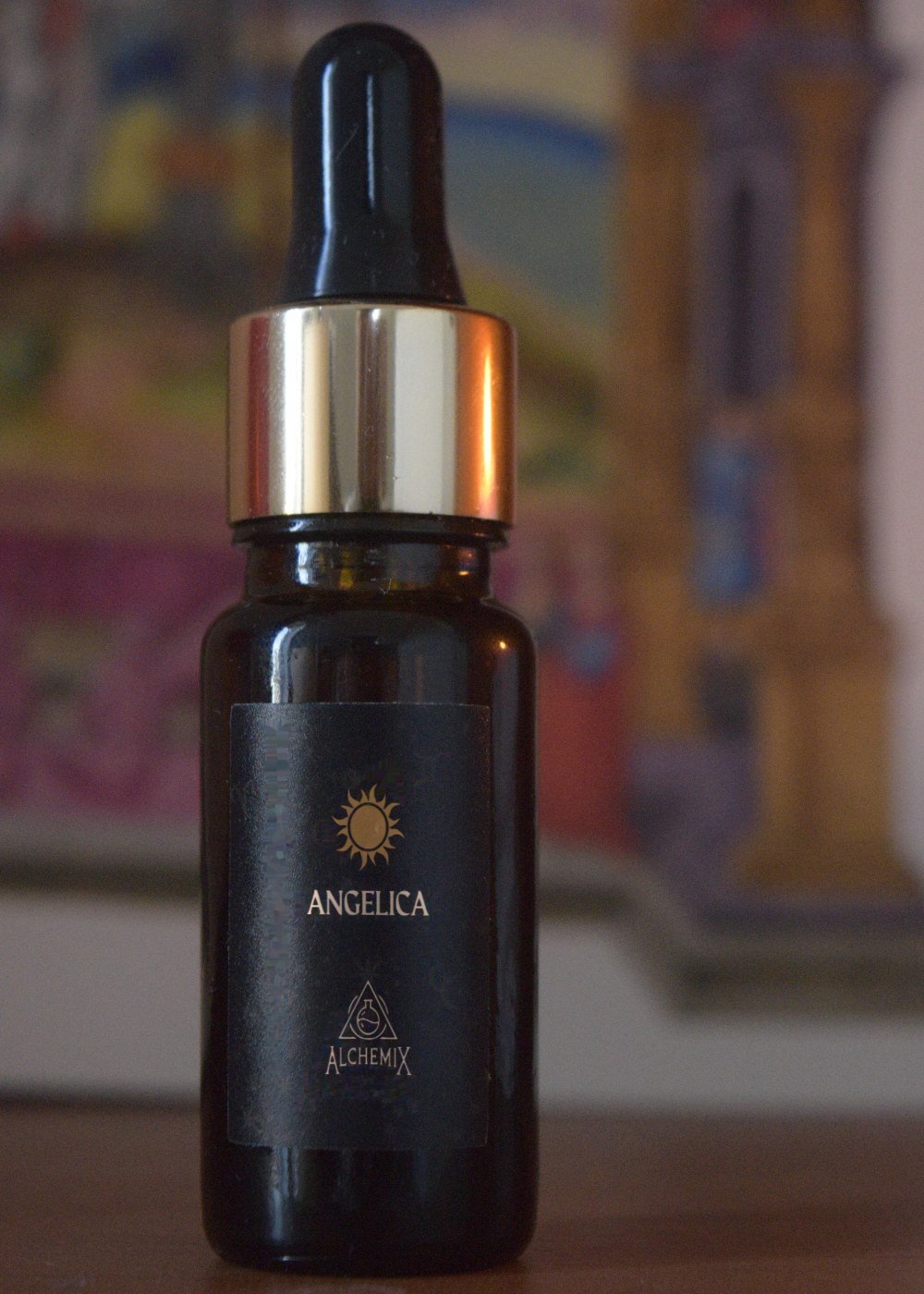
Angelica is kept in our apothecary as a spagyric tincture in the Solar register, with the plant's mineral salt returned to the vessel. You can see it here. As with everything on our shelves, it is a collector's piece: the history above belongs to the monks and herbalists of the past, and we sell no remedy.