
This article belongs to our Herbarium — a library of what past traditions believed about the great herbs of the Work. It records history, not advice: we describe what herbalists of other centuries did and thought, and we make no claims of our own. Nothing here is a guide to use.
The king's plant
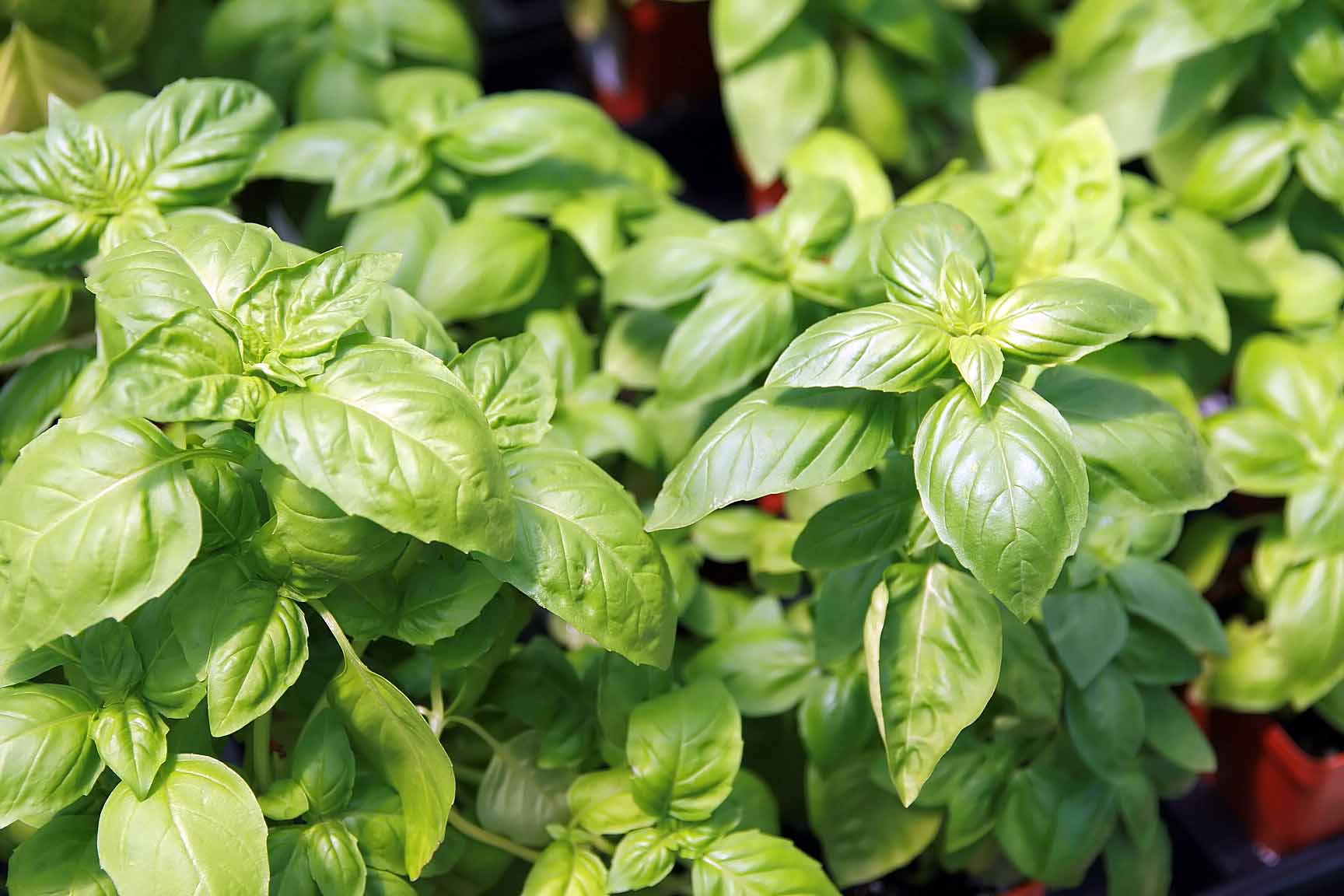
Basilikon phyton — the plant of the king. The Greeks gave basil its royal name, and no one is entirely sure why; what is sure is that the idea proved indestructible. The French kept it alive as herbe royale; the English word carries basileus, king, inside it to this day; and a long lineage of writers amused themselves by connecting the herb to the basilisk, the crowned serpent of the bestiaries whose name is built on the same word — a confusion that would shadow basil's reputation for centuries. The plant itself came out of the East: a tender annual of the mint family, square-stemmed, its small white flowers set in whorls up the stem, unable to bear the least frost. It traveled westward in antiquity along the same roads as pepper and silk, arrived in the Mediterranean as an exotic, and conquered it as if native. Few plants have held court in so many unrelated kingdoms at once — sacred in India, holy in the Greek church, beloved of Italian windowsills, and quarreled over by nearly every herbalist who wrote its name.
Tulsi at the threshold
In India, basil's sister tulsi — holy basil, a species of the same genus — is the most sacred household plant of the entire tradition. She grows in a special pedestal planter in the courtyard, is tended and circled daily, and is honored with a lamp at evening; devotion to the plant is devotion to the goddess held to dwell in her. Each autumn, in the month of Kartik, comes the Tulsi Vivah: the ceremonial wedding of the tulsi plant to the god Vishnu, celebrated with the full apparatus of a real marriage, and by tradition it opens the wedding season of the year. Her leaves accompany offerings in the temple, and a leaf is placed with the dying, that they should not leave the world without her company. Whatever else may be said of basil, no other kitchen-garden genus has been anyone's goddess.
The herb of the Cross
At the other end of the old world, basil entered Christian legend at its most solemn point. Greek tradition holds that when Helena, mother of Constantine, searched Jerusalem for the True Cross in the fourth century, basil was found growing over the place where it lay buried — sprung up there, the legend says, and the plant's Greek name, vasilikós, the royal one, seemed to the faithful no coincidence at all. The Orthodox Church has kept the association ever since: basil is grown at churches, brought by the faithful on the feast of the Exaltation of the Cross, and to this day a sprig of basil is the instrument with which the priest sprinkles holy water. A pot of it at a Greek doorway was at once piety and welcome — the living sign of a blessed and open house. Elsewhere in the old world the plant kept quieter company with the dead: in Persia, it is recorded, basil was planted upon graves.
The quarrel of the authors
No herb divided the old writers like this one. Culpeper, in the seventeenth century, opened his entry by sighing that basil was the herb "all authors are together by the ears about" — some ancient authorities, he reported, would not allow that it should be taken inwardly at all, while others praised it highly, and the quarrel had run since Galen and Dioscorides without ever finding a referee. The dark stories clustered around the serpent hiding in its name. Culpeper repeated a tale from Hollerius, a French physician, of a man who by often smelling basil had bred a scorpion in his brain; and it was a widespread belief, older than either of them, that scorpions engendered beneath pots of basil left undisturbed. The same lore held that basil and rue would not grow beside one another — the blessed herb of one tradition and the herb of grace of another, irreconcilable in a single bed. None of this ever dented the plant's standing in the kitchen, which suggests the cooks were never listening to the doctors.
Sown with curses
The strangest of all basil customs belongs to the sowing. The Greeks and Romans believed the seed came up best if it was sown with curses — railed at, stamped over, abused — and that a gentle gardener would get a poor bed for his courtesy. The conviction proved durable enough to enter the French language: semer le basilic, to sow basil, meant to rant and rave. It is a rare plant that keeps an insult alive for two thousand years as a horticultural instruction. Basil, the royal herb, was apparently expected to thrive on defiance — a king, the folk logic seems to run, is made by opposition.
The pot of basil
Literature gave the herb its darkest and most famous role. In the Decameron, Boccaccio tells of Lisabetta of Messina, whose brothers murder her lover; she buries his head in a great pot, plants sweet basil over it, and waters it with her tears until the plant grows wonderfully — and her brothers, discovering why it flourishes, take even the pot from her, and she dies of the loss. Keats retold the story for English readers as Isabella; or, The Pot of Basil, and the Pre-Raphaelite painters — Holman Hunt above all — gave it a body of images: the pale girl embracing the pot on its embroidered stand. That a kitchen herb could carry so much grief and devotion says something about how intimately Europe lived with it.
The homelier love-lore is sunnier. In parts of Italy, it is said, a sprig of basil worn by a young man announced a suitor, and a pot set out on the windowsill a welcome; in Romanian folk custom, a lad who accepted a sprig of basil from a girl's hand was understood to be engaged from that moment. And the old herbals called it, through all their quarrels, a plant of joy: it was believed to gladden the heart, enliven the senses and give courage to the hesitant — the king's gift, in the smallest possible coin.
The warm guardian
Culpeper, for all his complaining, was in no doubt about the planetary address: basil, he wrote, is a herb of Mars and under the Scorpion — the serpent-lore of centuries compressed into a single astrological line. The hermetic tradition has kept the Mars but reads him at the hearth rather than the battlefield: the protective warmth of the threshold guardian, resolve in its domestic and daily form. It is the reading the plant's whole biography supports — the pot at the Greek door, the tulsi at the Indian threshold, the sprig in the suitor's cap: Mars domesticated, the courage that keeps a house rather than burns one, the royal fire banked low and kept burning.
The Magical Properties of Basil
Gather the old grimoires and basil appears again and again among the herbs of virtue. The folk magicians of Europe read in it a double current — the Mars that armed the threshold and the Venus that softened the heart — and worked it for both. Cunningham's modern compendium of the tradition set the older beliefs down plainly: that basil was carried to still lovers' quarrels, strewn to steady a wandering affection, and kept about the house as a ward against ill will. It was counted, too, a herb of gladness, said by the old herbalists to lift a heavy spirit and lend courage to the timid — the king's warmth offered in the smallest coin. What a spagyric tincture might preserve of a plant so long praised was a question the alchemists put to every herb of virtue.
Basil in Folklore: Love, Grief, and the Pot of Basil
No other kitchen herb has carried so much of the heart's weather. Boccaccio's Decameron gave it grief: Lisabetta of Messina, planting sweet basil over her murdered lover's buried head and watering it with her tears until it grew wonderfully — love washed with tears, and a plant made of mourning. Keats set the tale in English as Isabella; or, The Pot of Basil, and the Pre-Raphaelites painted the pale girl bent over her flowering pot. Against that darkness the folk kept a sunnier lore: in old Italy a sprig worn by a young man was said to announce a suitor, and in Romanian custom a lad who took basil from a girl's hand was reckoned engaged from that hour. Grief and betrothal both, the royal herb stood at the two great thresholds of the heart.
From Tulsi to Threshold: Basil as a Herb of Protection
Wherever basil grew, it was set to guard a boundary. In India the sacred tulsi stood as household guardian, tended at a pedestal in the courtyard and honored with an evening lamp, and a leaf was laid with the dying that they should not go unaccompanied. The Mediterranean kept the protective office in its own key: a pot at the Greek doorway was piety and welcome at once, and older custom, it is recorded, placed basil in the hands of the dead and planted it upon graves. Threshold, deathbed, and grave — the herb was posted at each of them, a green sentry believed to keep watch where a house was most open to what lay outside it. The royal name and the guardian's duty went, in the old mind, together.
Basil and the Planet Mars: Culpeper's Correspondences
Culpeper fixed the herb's address without hesitation: basil, he wrote, "is an herb of Mars, and under the Scorpion" — a masculine plant of the fiery triplicity, the serpent-lore of centuries folded into a single astrological line. Yet the correspondence he assigned ran double, for the herb of the war-star was also, through all the quarrels of the authors, a plant of love and gladness — Mars and Venus in one leaf. The hermetic tradition kept the Mars but read him at the hearth: not the soldier's fire but the guardian's, resolve in its domestic form. It is the reading basil's whole biography supports — the fire of a king, banked low and kept burning at the door.
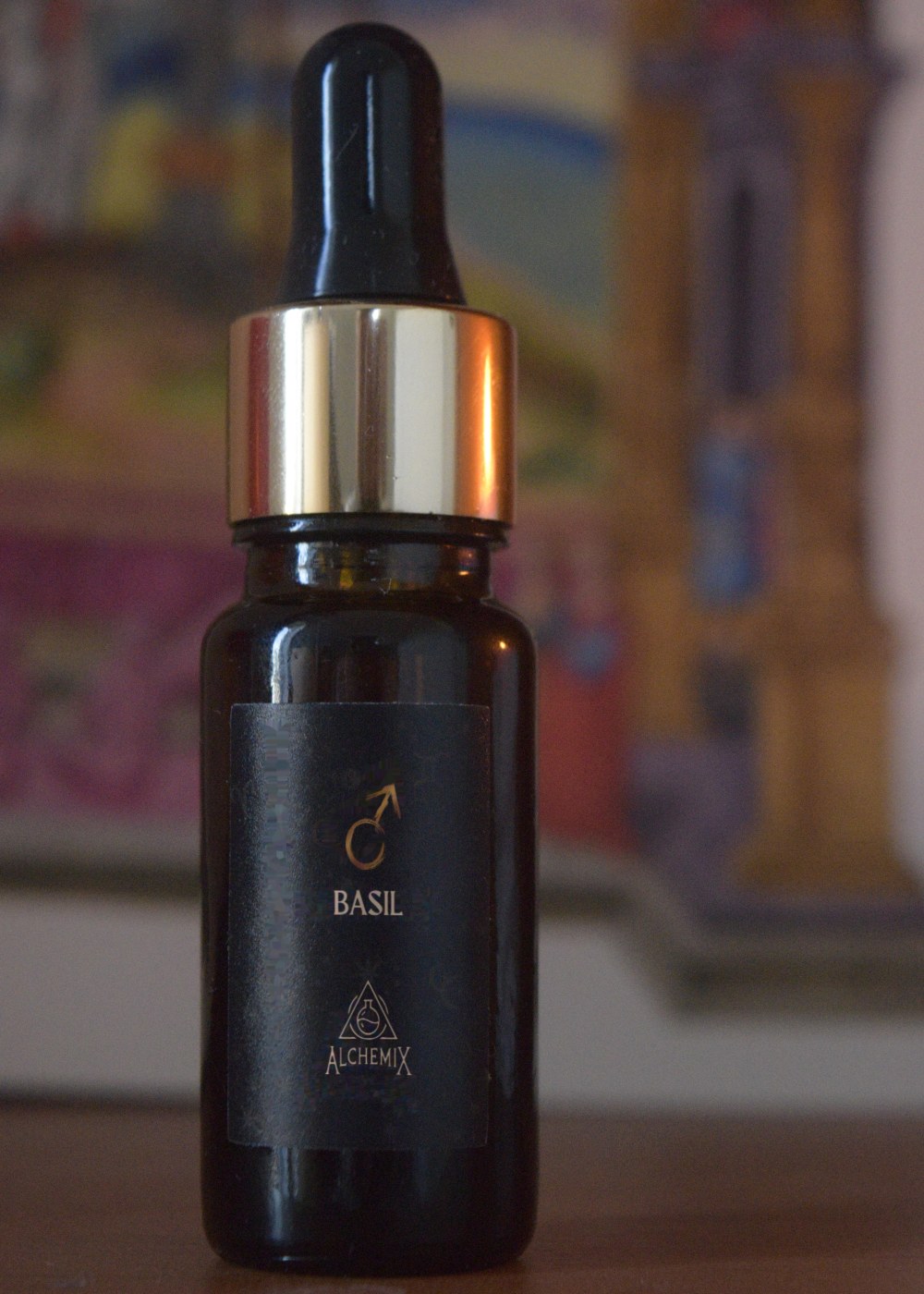
Basil is kept in our apothecary as a spagyric tincture in the Martial register. You can see it here. As with everything on our shelves, it is a collector's piece: the history above belongs to the traditions of the past, and we sell no remedy.