
This article belongs to our Herbarium — a library of what past traditions believed about the great herbs of the Work. It records history, not advice: we describe what herbalists of other centuries did and thought, and we make no claims of our own. Nothing here is a guide to use.
Five islands on earth
For most of human history, every clove in the world grew on five small volcanic islands of the Moluccas — Ternate, Tidore, Moti, Makian and Bacan — and nowhere else. They are steep, green, storm-lashed cones rising straight out of the sea in the eastern reaches of what is now Indonesia, and for a long span of centuries they held a monopoly the modern mind can barely credit: a single spice, growing on a handful of specks in an ocean most of the world had never heard of, feeding a hunger that reached from the courts of China to the kitchens of northern Europe. Scarcity multiplied by desire made the little dried flower bud one of the most valuable objects on the planet, traded weight for weight against gold across seas very few travelers survived to cross twice.
On the islands themselves the tree was not a commodity but a member of the household. A clove tree was planted at the birth of a child, and the two were bound together in the reading of the family: the child's fortunes were watched in how the tree fared, its vigor a kind of omen. To fell such a tree carelessly, or to let a foreigner do so, was to cut at something living in the family's own line. That intimacy would matter later, when empires arrived with axes.
The nail and the bud
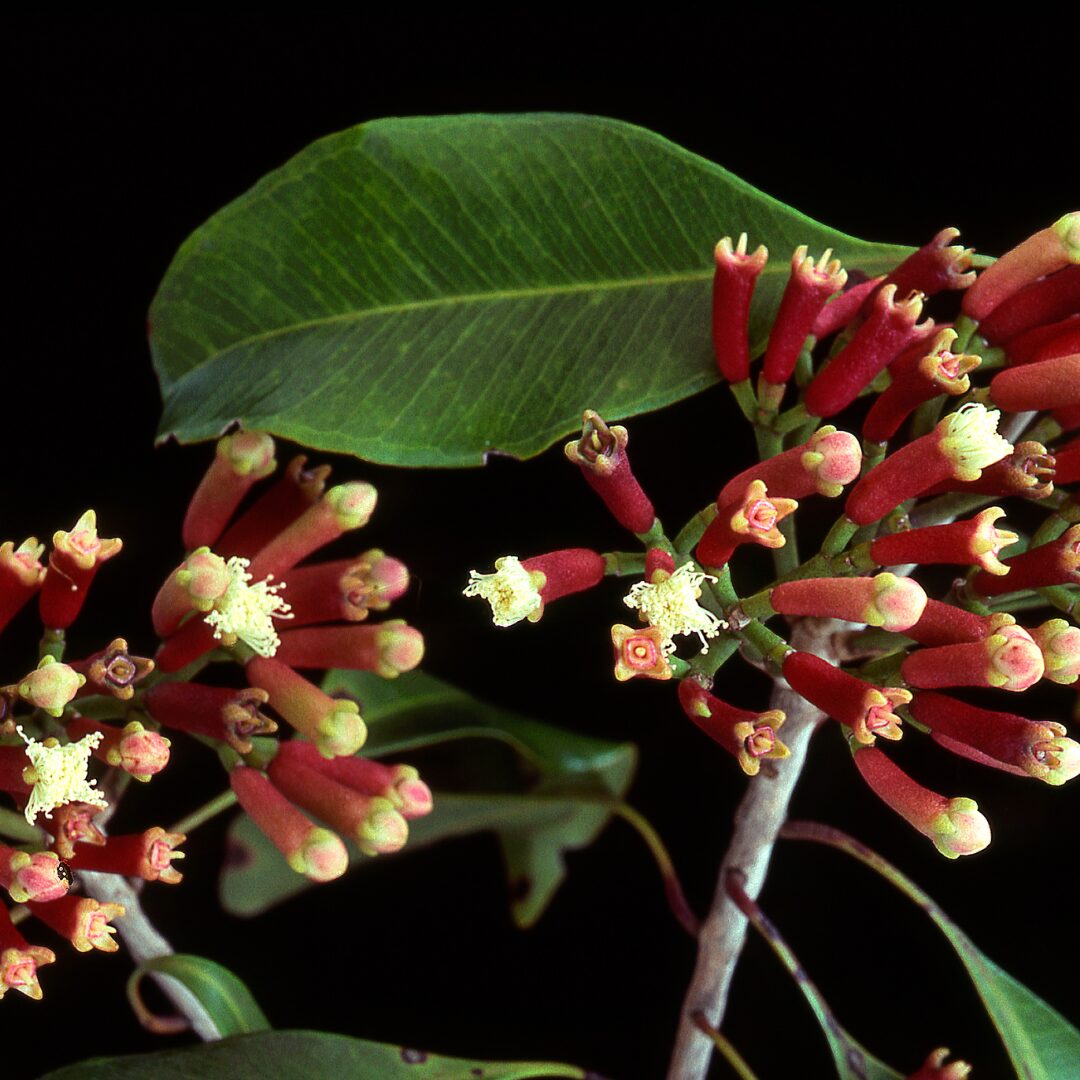
The clove we know is not a seed or a berry but a flower that never opened — the unexpanded bud of Syzygium aromaticum, a tall evergreen of the myrtle family, picked while still closed and dried until it hardens to that familiar dark, four-pointed shape with its round head. The name follows the shape. It comes through the French clou from the Latin clavus, a nail; the Dutch kruidnagel means, plainly, "spice-nail," and the English "clove" carries the same buried metaphor. Hold one in the palm and the reason is obvious: a small iron nail with a swollen head, forged by a tree.
The tree is slow and particular. It wants heat, rain, volcanic soil and the sea air of the tropics, and for the whole first age of the trade it simply refused to grow anywhere the Moluccas' rivals could reach. This botanical stubbornness — not any secret of cultivation — was the real engine of the clove's fabulous price. The merchants who carried it west did not need to guard a recipe. Geography guarded it for them.
The emperor's breath
The bud's oldest recorded office is a courtly one. Officials of the Han court of China were required, the histories tell us, to hold cloves in the mouth before addressing the emperor, so that their breath might be worthy of the throne — one of the earliest recorded uses of a spice purely for the sweetness it lent the speaker. From that eastern court the clove began its enormous journey westward, moving hand to hand along the longest trade routes the ancient world possessed, its origin a jealously kept secret at every transfer.
By the time it reached Rome the mystery was total. Pliny the Elder, writing in the first century, knew the spice and grumbled at the river of imperial silver flowing east to pay for such luxuries, but neither he nor anyone in the Mediterranean had the faintest idea where cloves actually came from. The Arab and Malay traders who controlled the middle of the route had every reason to keep it that way, and for well over a thousand years they did, wrapping the bud's origin in tales of far islands and fierce guardians. A spice no European had seen growing was, in every sense, a thing out of legend.
In the cold of medieval Europe, that legend acquired weight. It was believed that the clove warmed the blood, sweetened the breath, kindled vigor and fortified body and resolve alike; the old herbalists counted it among the great warming spices, and in a world of long dark winters a spice that carried the memory of the tropics inside it bordered on the miraculous. The bud found its way into the physicians' compounds, into spiced wine, into the pomander — the pierced ball of aromatics that the wealthy carried against the smells of the street — and into the studded orange that still perfumes European houses at midwinter. Where it went, it announced itself; there is no discreet way to use a clove.
It was a kitchen treasure as much as a physician's one, and the two were not yet separate trades. The medieval cook and the medieval apothecary drew on the same shelf of spices and the same theory of warming and cooling, so that to spice a dish richly was, in the thinking of the age, also to temper it. A clove-studded ham, a mulled wine, a gingerbread heavy with the dark bud: these were feast-foods precisely because the spice in them had crossed half the world at ruinous cost, and to serve them was to display a wealth measured in nutmeg, pepper and clove. The very extravagance that emptied Roman treasuries and later sent ships to their deaths made the clove, on the table, a small blazing token of abundance — which is exactly the reading the hermetic tradition would give it.
The price of the Moluccas
Because the clove could not be grown at will, it could only be seized, and the age of European expansion is in no small part a war over these five islands. Magellan's expedition set out from Spain in 1519 with five ships and the aim of reaching the spice islands by sailing west. Three years later a single battered vessel, the Victoria, came home — the first ship to circle the earth — with most of its crew dead and its captain among them. Yet the cargo of cloves in her hold sold for enough to pay for the entire catastrophe: five ships lost, hundreds of lives, and still the voyage turned a profit on the strength of what one ship's belly could carry. No fact tells the story of the clove's value more plainly.
What followed was darker. The Dutch, having wrested control of the trade in the seventeenth century, set out to guarantee their monopoly by the simplest and most brutal method available: they confined the clove to a single island under their guns and uprooted every clove tree growing beyond it, destroying in the process the birth-trees of countless island families. The trade was defended, for a time, with fire and the axe. It was broken at last in the eighteenth century by a French administrator with the almost too-perfect name of Pierre Poivre — Peter Pepper — who smuggled living seedlings out of Dutch reach and carried them off to be planted in other tropical soil, in Mauritius and beyond. Once the tree grew in more than one place on earth, the spell of the Moluccas was finished. The clove became, in time, an ordinary thing on the kitchen shelf, and it is worth remembering, each time one turns up in a jar of mulling spice, that men once died in their hundreds for a handful of them.
Jupiter's coal
To the hermetic reading, the clove belongs to Jupiter — the planet of abundance, expansion and largesse, the good fortune that spreads outward and warms whatever it reaches. The assignment sits easily on a spice whose whole history is one of extravagance: the emperor's honored breath, the silver draining east, the single ship whose fortune redeemed a fleet, the studded orange glowing at the center of the winter feast. Jupiter is the open hand and the loaded table, and the clove is its coal — small, dark, hard as a nail, and holding within its tight little body enough heat and sweetness to have moved kings and drowned sailors and redrawn the maps of empire. Few plants pack so much of the world into so small a compass.
A Spice Worth Its Weight in Gold: Clove in History
For most of recorded history every clove on earth came from five volcanic islands of the Moluccas, and scarcity turned the little dried bud into one of the most valuable objects in the world — traded, the old accounts insist, weight for weight against gold. Its offices were as grand as its price. At the Han court of China, some two centuries before our era, officials were required to hold cloves in the mouth before addressing the emperor, so that their speech might be worthy of the throne. Centuries later the Dutch guarded the same value with fire, burning clove groves beyond their control to keep the supply thin and the price towering. Few plants carried so much of the world's hunger inside so small a compass. (The spagyric tincture draws on that same concentrated character.)
The Magical Properties of Clove
To the old hermetic reckoning, the clove belonged to Jupiter and to the element of fire, and was filed among the masculine, warming spices. The magical traditions that inherited it read the bud as a plant of protection above all — an aromatic the cunning-folk associated with banishing negativity, with driving off what troubled a house, and with the older rites of exorcism. Its Jovial nature gave it a second office: the drawing of prosperity and good fortune, an easy fit for a spice whose whole biography was one of abundance and largesse. The lore linked it, too, with attraction and friendship, and with the warmth that draws people together. These were the beliefs of the old grimoires and folk practitioners, set down here as folklore and not as instruction.
Clove in Folk Magic: Protection and Silencing Gossip
One thread of clove lore was strangely specific. Beyond its broad reputation for protection, the bud was long associated in folk magic with the stopping of damaging talk — with silencing gossip, rumour and slander directed at a household or a name. Practitioners of the old cunning traditions were said to work the clove for exactly this: to close a mouth spreading harm, to still whispers, to guard a reputation against the corrosive chatter of neighbours. It sat easily beside the spice's other warding uses, for the same instinct ran through all of them — the clove as a small, hard, aromatic guardian set against what might creep in and spoil. Here again we record the belief as tradition held it, a fragment of folklore rather than any counsel of ours.
Clove and the Planet Jupiter
The hermetic tradition set the clove under Jupiter — the planet of abundance, expansion and largesse, the good fortune that spreads outward and warms whatever it reaches. The assignment sat easily on a spice whose whole history was one of extravagance: the emperor's honored breath, the silver draining east, the single ship whose fortune redeemed a fleet, the studded orange glowing at the center of the winter feast. Jupiter was the open hand and the loaded table, and the old readers called the clove its coal — small, dark, hard as a nail, and holding within its tight little body enough heat and sweetness to have moved kings and redrawn the maps of empire. Few plants were felt to pack so much Jovial fortune into so small a thing.
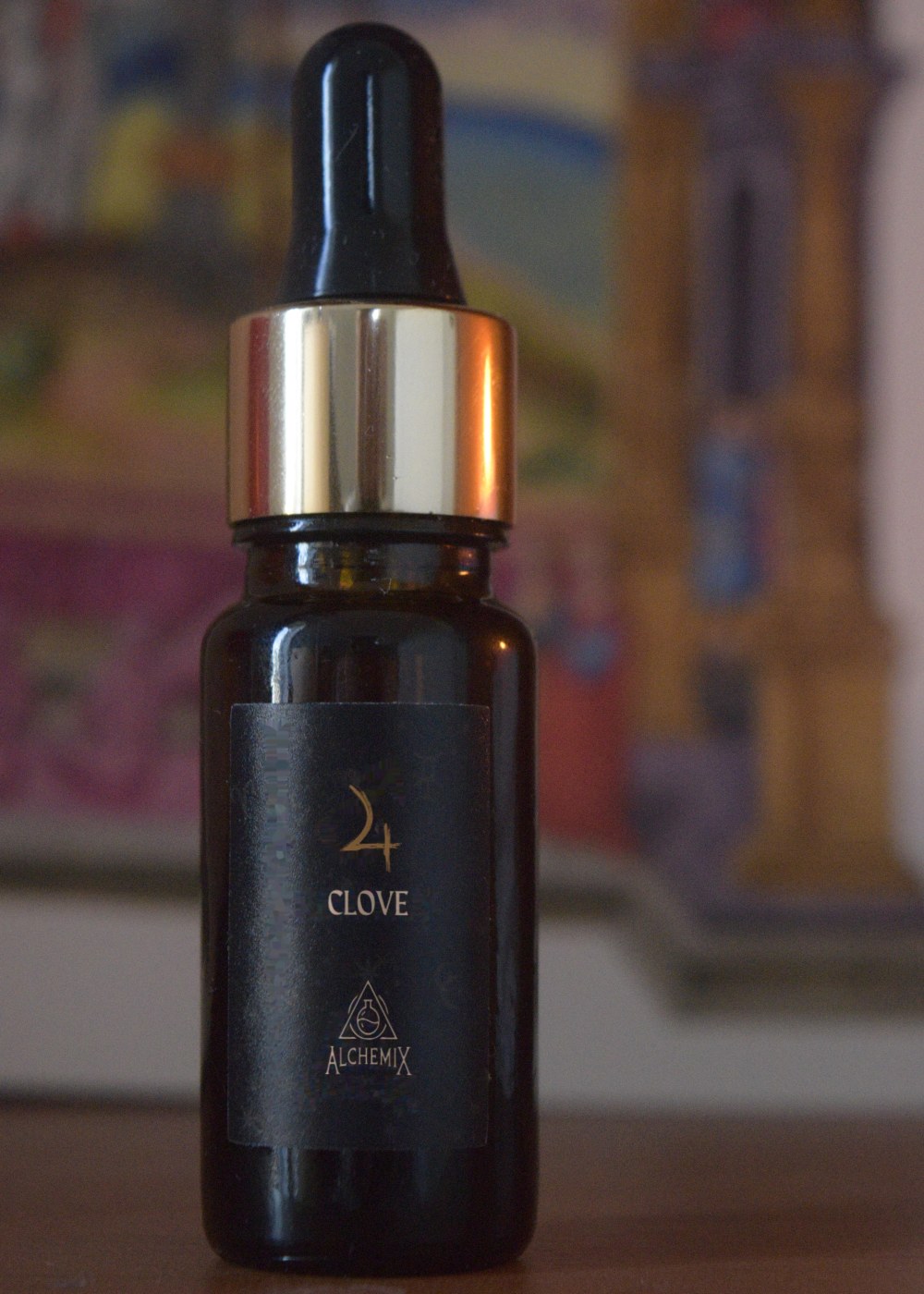
Clove is kept in our apothecary as a spagyric tincture in the Jovian register — our first work. You can see it here. As with everything on our shelves, it is a collector's piece: the history above belongs to the traders and courts of the past, and we sell no remedy.