
This article belongs to our Herbarium — a library of what past traditions believed about the great herbs of the Work. It records history, not advice: we describe what herbalists of other centuries did and thought, and we make no claims of our own. Nothing here is a guide to use.
The roof of the world
To picture cuti-cuti one must first picture where it lives. The altiplano is the high tableland of the central Andes, a vast cold plateau lying mostly above three and a half thousand meters, spread across southern Peru and Bolivia between the two great cordilleras of the mountains. It is one of the harshest inhabited landscapes on earth: thin air that leaves the lungs of newcomers gasping, a sun so fierce at that altitude that it burns in minutes, and nights that plunge below freezing even in the growing season. The ground is stone and coarse grass; trees give up long before the plateau does. Water is scarce, wind is constant, and the light has a hard mineral clarity that flattens distance and makes the whole plateau feel like the surface of some higher, colder planet.
People have lived here for thousands of years all the same — herding llamas and alpacas, coaxing potatoes and hardy grains out of the reluctant soil, building a civilization of endurance in a place that concedes nothing. The plants that share this ground with them are, of necessity, survivors. Nothing soft grows on the altiplano. Everything that lives there has made a hard bargain with the cold, the sun and the wind, and the vegetation of the high passes is a catalogue of thrift: low, tough, small-leaved, silvered or waxed against the light, hoarding what little the place gives. It is out of exactly this company that the healers drew cuti-cuti.
A fern where ferns should not be
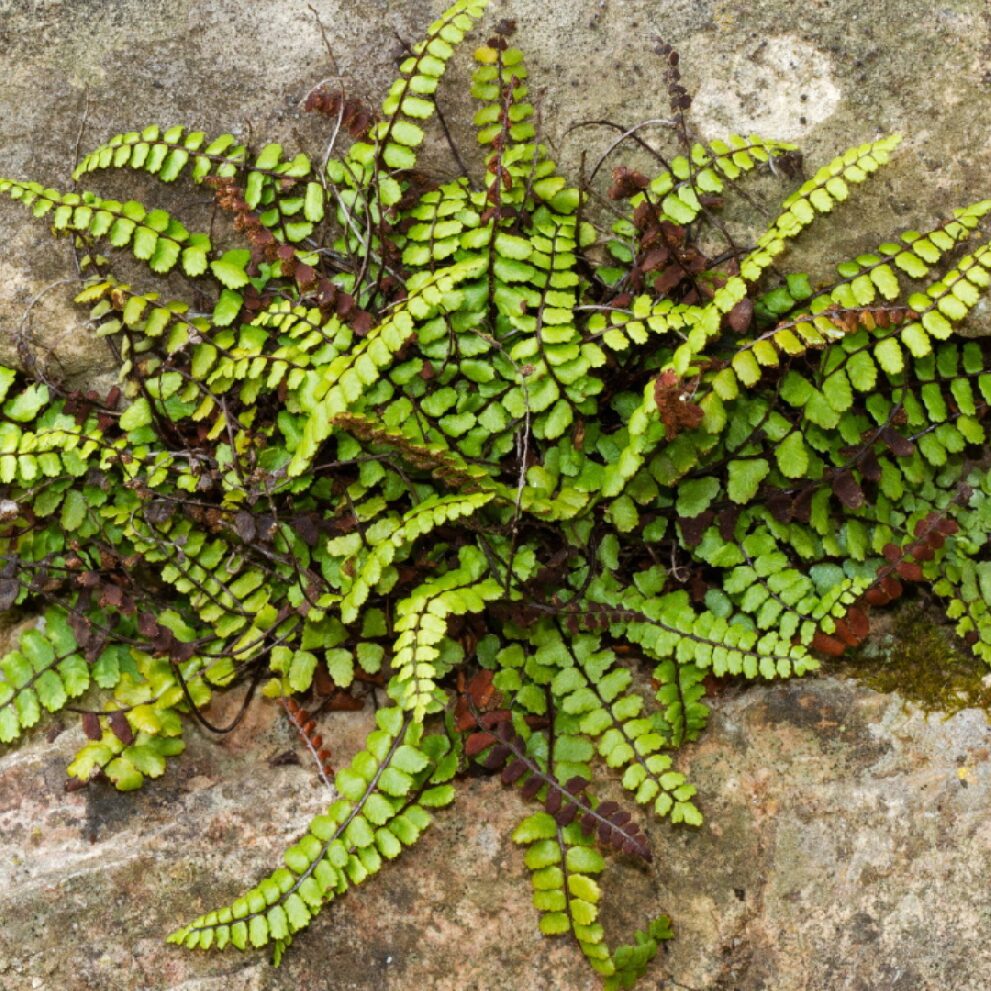
Argyrochosma nivea is a small fern — and a fern is already a surprise here, for the family belongs by temperament to damp, shaded, kindly places, the streambank and the forest floor. This one has made its home instead in the cracks of sun-blasted rock at altitudes that would kill most of its relatives outright. Its trick is written on the plant. The undersides of its fronds are coated in a fine white-silver powder, a waxy farina that gives the genus its name — Argyrochosma, from the Greek for "silver dust" — and the species its epithet, nivea, snowy. That silver coat is armor: a mineral bloom that throws back the punishing high-altitude sun and holds moisture against the desiccating wind. Turn a frond over and it shines like a thing dusted with frost. The fern that should not be able to live at four thousand meters lives there by wearing the color of the snow.
The Quechua name folds the plant's whole character into a single word. Cuti-cuti is tied in folk etymology to the verb kutiy — to return, to turn back, to come again — and the doubling intensifies it: the plant that returns and returns, that turns back whatever tries to finish it, that endures. It is the sort of name a people gives to something they have watched survive conditions that kill. Where the lowland world names plants for their flowers or their fruit, the high country named this one for its stubbornness, which was the quality it had to spare.
The healers' esteem
For generations the healers of highland Peru and Bolivia held cuti-cuti in singular esteem and kept it among their most trusted plants. That is a rare distinction for a fern anywhere. The world's folk pharmacopoeias, and its formal ones, have mostly passed the ferns over; they are old plants, without flower or seed, and most traditions have found little use for them. For a fern to win a firm place in a working herbal, prized rather than ignored, is itself a mark of how highly this one was regarded.
Part of that regard, the tradition suggests, came from the plant's own testimony. A herb gathered on foot, at altitude, from the cracks of the coldest rock, was understood to carry something of where it had grown. It was believed that cuti-cuti lent its keeper a share of the fern's own hardiness — the strength of the thing that survives where nothing else consents to. In a landscape where endurance was the first virtue and the difference between living and not, a plant that embodied endurance so plainly was bound to be treasured. The Andean way of reading herbs looked hard at where and how a plant lived, and read its character from its life; and no plant of the high passes made its character more legible than this silver survivor of the frost-line.
Sold in the bundles of the sierra
The plant did not stay locked in the knowledge of specialists. It reached the market, and the market has kept it. In the mercados of the highland towns, among the potato sacks and the woven cloth, sit the yerbateras — the herb women — behind their heaped baskets and tied bundles of dried plants, keepers of a pharmacopoeia that was never written down but simply asked for, by name, across the counter of a basket. Cuti-cuti is among their wares to this day, sold in small dried bundles, silver-backed and tough as its home, gathered by hand from the high ground and carried down to the towns.
These markets are the reason a plant of the empty altiplano has a continuous, living history at all. Written records of Andean folk medicine are thin, late and mostly the work of outsiders; the true archive was the standing knowledge of the sellers and the healers who bought from them, an oral and commercial transmission running unbroken through centuries that kept no notes. To ask a yerbatera for cuti-cuti is to draw on that transmission directly — to name the silver fern of the high passes and have a bundle of it put into one's hand as it has been put into hands for longer than anyone at the stall could say.
Saturn's pupil
If the doctrine of signatures — the old belief that a plant's outward form declares its inward virtue — ever wrote a clearer sentence, we have not read it. A small, unshowy, silver-grey survivor of the cold heights, teaching endurance simply by existing: the reading almost makes itself. In our hermetic register the assignment is Saturn, the planet of time, discipline, limitation and structure, the slow patient power that outlasts. Saturn is the cold and the high place, the long game won by simply remaining, and the fern of the frost-line is its perfect pupil — the hermit of the mountain, keeping its silver counsel in the thin air, turning back the sun and the wind and the years, and coming again, and coming again, exactly as its name says it will.
The Silver Fern: A Plant of the High Andes
Everything essential about this plant is written in silver. Turn a frond of Argyrochosma nivea and its underside shows a fine white powder — a waxy farina that dusts the leaf like hoarfrost settled on stone. The genus name records it exactly: Argyrochosma, from the Greek argyros, silver, the silver-powdered fern. That bloom was armour against the heights. It threw back a sun fierce enough to burn in minutes at four thousand meters and held what little moisture the wind had not already stripped away. A plant of thin air and bare rock, it grew where softer relatives could not follow, lodged in the cracks of sun-blasted stone above the tree-line, wearing the colour of the snow it lived beside. The silver was never ornament but survival — a salt-bright, mineral skin worn by a thing that had made its hard bargain with the cold.
The Name Cuti-Cuti
The name repays a moment's attention, though only as a matter of language. In Quechua the root kuti carries the sense of turning — to turn, to return, to turn back, to come again — and the doubling in cuti-cuti lends the syllable its full weight. This is an observation to sit with, not a claim to press: the word belonged to the plant long before we came to it, and what the high people intended by it we can only guess. One might notice that a fern which returned each season to the same cold cracks, and came again where nothing else consented to grow, wore such a syllable well. But that is the reader's own reflection, offered here as etymology and nothing further. We record the root; we draw no conclusion from it.
Cuti-Cuti in Andean Folklore
The folklore of the altiplano read plants by where and how they lived, and cuti-cuti kept the hardest company of all. The healers of the high sierra held it in singular esteem — a rare distinction for a fern, since most traditions of the world have passed the ferns over. Part of that regard, the tradition suggested, was owed to the plant's own testimony: a herb gathered on foot from the coldest rock was understood to carry something of where it had grown. In the mercados of the highland towns the yerbateras kept it among their tied bundles, silver-backed and tough as its home, asked for by name across the counter of a basket. It was, in the old reading, the plant of the hard places — treasured for the endurance it wore so plainly, and for nothing that we would ever name a use.
Cuti-Cuti and the Signature of Saturn
No European tradition ever assigned this plant a planet; it grew a hemisphere away from the astrologers who ruled the old herbals, and to pretend otherwise would be invention. The signature we give it is our own — a reading of this house, offered in the hermetic register and claimed as nothing older. In that register cuti-cuti belongs unmistakably to Saturn: the planet of cold and height, of stone and time and the discipline of simply remaining. Saturn is the long game won by outlasting, the grey hermit of the mountain keeping his silver counsel in the thin air. A small, unshowy, silver survivor of the frost-line, teaching endurance merely by existing, is the planet's perfect pupil. To learn how such a signature is carried into the vessel, see What is a spagyric tincture?.
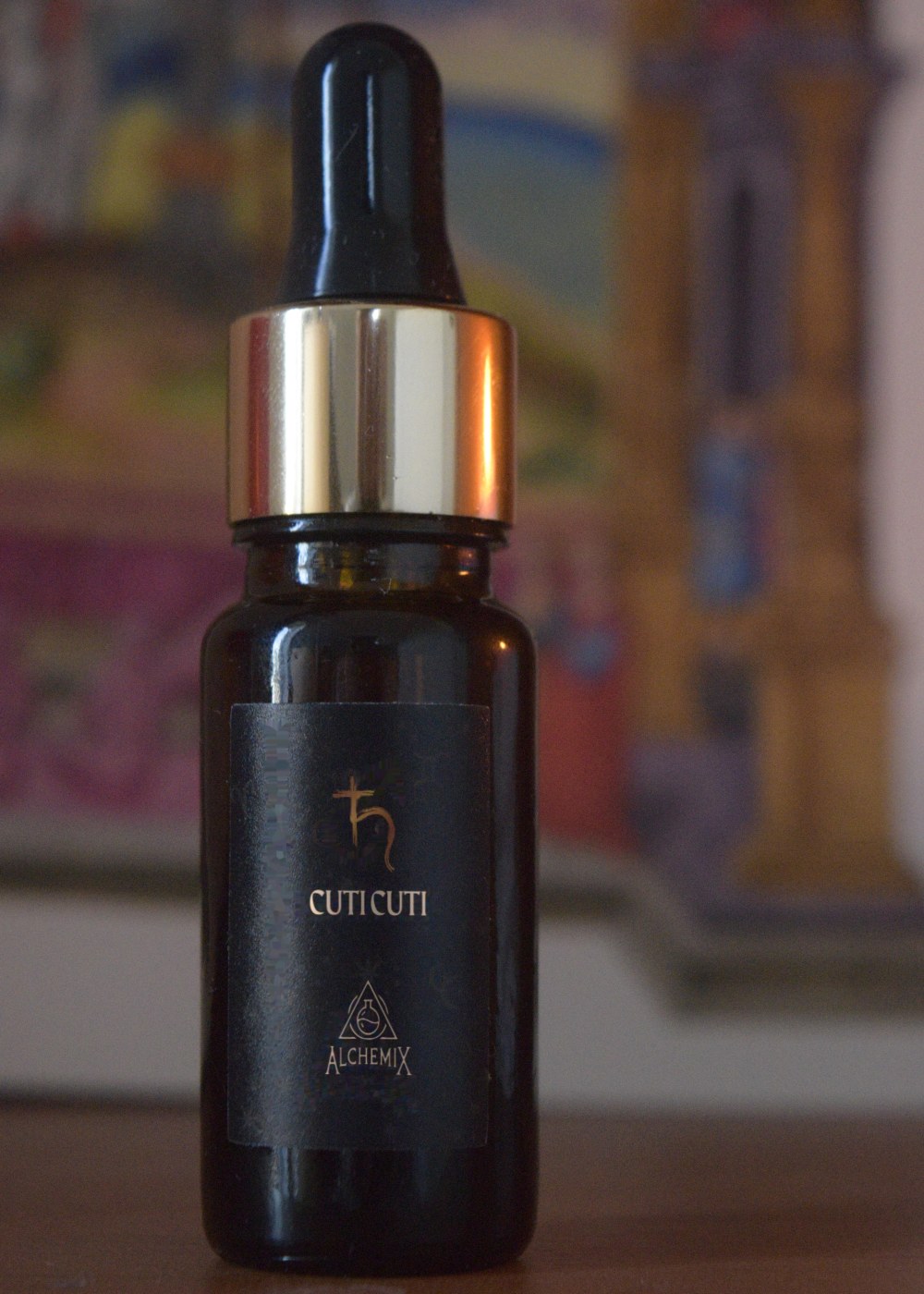
Cuti-Cuti is kept in our apothecary as a spagyric tincture in the Saturnian register, with the plant's mineral salt returned to the vessel. You can see it here. As with everything on our shelves, it is a collector's piece: the history above belongs to the healers of the altiplano, and we sell no remedy.