
This article belongs to our Herbarium — a library of what past traditions believed about the great herbs of the Work. It records history, not advice: we describe what herbalists of other centuries did and thought, and we make no claims of our own. Nothing here is a guide to use.
Lavare: to wash
Lavender's name is its résumé. The traditional etymology takes it from the Latin lavare, to wash, because the Romans threw the flowering stems into their baths — for the scent, and for the conviction that the plant purified whatever it touched. A minority of scholars prefer livere, "to be bluish," and would name the herb for its colour instead; but the washing story won the argument where it mattered, in the mouths of the people. From the bathhouse the herb walked into every corner of European domestic life: strewn on floors, folded between linens, hung in bundles from the rafters, sewn into pillows. For a thousand years, the smell of lavender was simply the smell of a clean and ordered house.
The etymology even reached the labour market. In medieval and early modern England, the women who washed linen for a living were called lavenders — laundresses named for the plant, or the plant for them, the two words rinsed together beyond separating. The washerwomen of Provence and elsewhere were long said to dry their linen across the living lavender bushes, so that the cloth came off the hillside scented with the south.
What lavender is
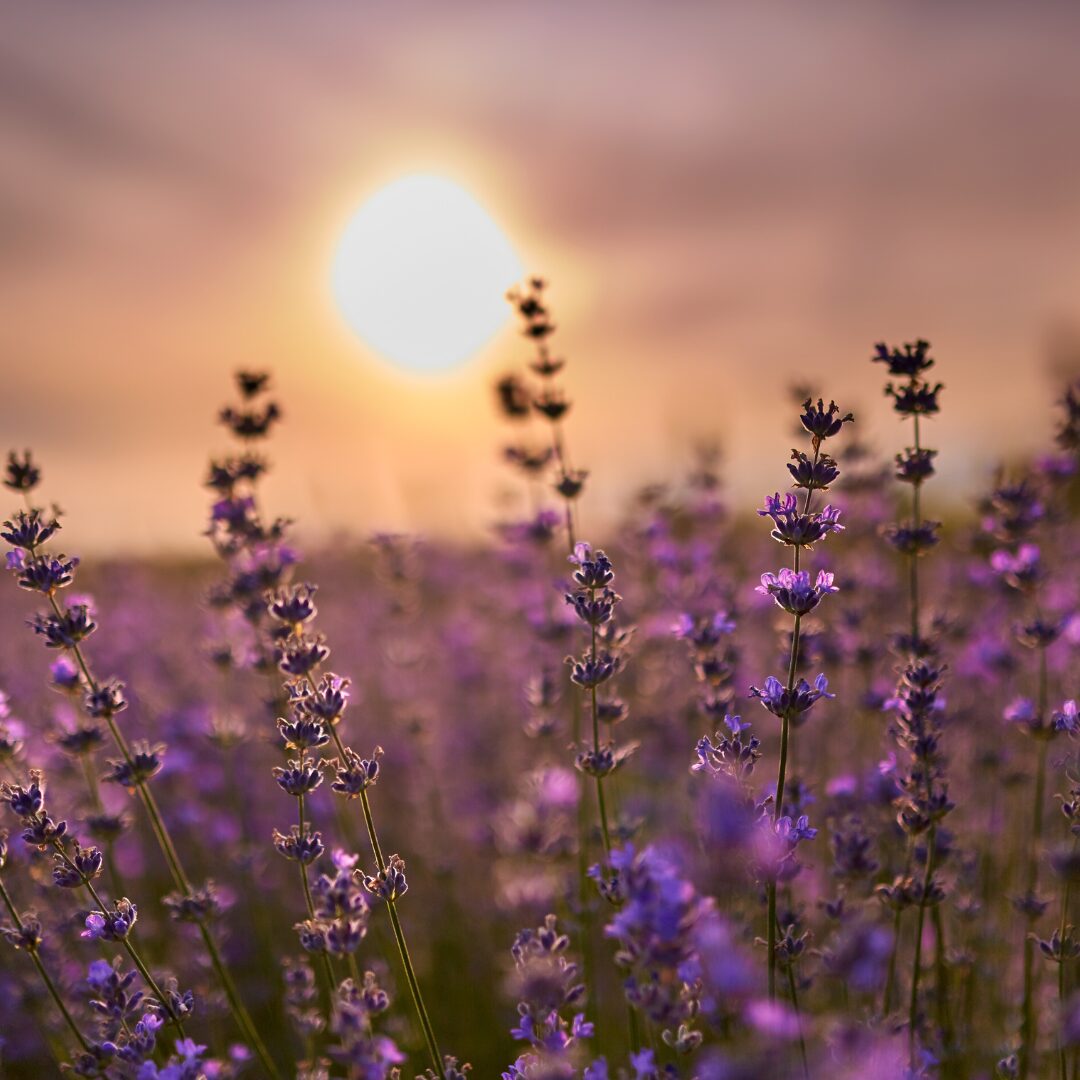
The plant behind the folklore is a small shrub of the mint family, native to the dry, stony hills of the Mediterranean — a plant of thin soil, hard light and little water, which is exactly where its perfume is strongest. The narrow leaves are silvered with fine down; the flowers stand clear of the bush on bare stems, in the violet spikes that gave one whole species its name. The old trade distinguished its kinds carefully: the fine narrow-leaved lavender of the high slopes, the broader-leaved spike lavender of the lower ground — whose harsher oil, "oil of spike," served painters and porcelain-decorators as a working solvent — and the tufted French lavender of the coast.
That coastal species carries the plant's oldest datable history. Dioscorides, in the first century, wrote of stoechas, the lavender gathered on the islands off Marseille that the ancients called the Stoechades; and through him the plant entered the long river of the European herbals. Classical writers also entangled lavender with the precious "nard" of the East — spike lavender was long sold as the poor man's spikenard — a confusion that flattered the herb enormously and took centuries to unpick.
The infirmary door
In the monastery gardens that kept European herbal knowledge alive through the medieval centuries, lavender grew near the infirmary. Hildegard of Bingen, the twelfth-century abbess and naturalist, gave the plant a chapter of its own in her Physica and held — in the frank supernatural register of her age — that its scent drove off unclean spirits. The claim sounds strange to modern ears until one hears what it is actually saying: to the medieval mind, corruption, ill air and evil influence were one continuous enemy, and lavender stood against all of it.
Since antiquity it was believed that her scent quieted the nerves, eased the day's tension, and invited a gentle, natural sleep — the sleep pillow stuffed with lavender is one of the oldest pieces of folk furniture in Europe. The sixteenth-century herbals counted lavender among the comforting herbs of the head and heart, given — as they believed — against grief and heaviness of spirit. Not every belief was gentle, though: an old Mediterranean superstition, repeated since antiquity, warned that the asp made its nest beneath the lavender bush, so that the plant had to be approached with respect. Even the folk imagination felt that so much sweetness wanted a guardian.
The plague years
In the plague centuries, lavender's reputation for purity turned deadly serious. It went into the vinegars and pomanders people carried against the poisoned air, and into the herbs burned in sickrooms and streets. The famous vinegar of the four thieves, said to protect a gang of grave-robbers looting the plague-struck houses of Marseille, counted lavender among its herbs — a legend, told in a dozen versions, but a faithful record of what people reached for when they were afraid.
The glove-makers of Grasse perfumed their leather with lavender, and it was widely said that the perfumers and lavender-workers escaped the pestilence — a piece of guild folklore that did the trade no harm at all. From scented gloves, Grasse built the industry that became modern perfumery; lavender was among the foundation stones.
The queen's conserve, the street cry
The English fell in love with the plant and never recovered. Elizabeth I was said to demand lavender conserve at her table and lavender water for her person; the still-rooms of the great houses made lavender waters, conserves and scented waters as a matter of course, and the seventeenth-century garden writers remarked that most of the lavender grown in England was spent on perfuming linen, gloves and apparel — the linen chest again, the plant's true throne. It is recorded of the French court, a century earlier, that mad king Charles VI sat upon cushions stuffed with lavender: royalty on both sides of the Channel resting, literally, on the herb of calm.
By the eighteenth and nineteenth centuries England had its own lavender country: the fields around Mitcham in Surrey supplied the London trade, and the cry of the lavender-sellers — "Who'll buy my sweet blooming lavender?" — became one of the classic street cries of London, sung at doors every late summer. Sprigs were sold to be laid among the linens against winter; the purchase was as seasonal and as certain as the harvest itself.
The Magical Properties of Lavender
Beyond the laundry and the linen chest, lavender carried a second life in the folk imagination — a life of charms, wards and quiet magic. The old cunning-folk of Europe counted it among the herbs of purification and protection, a plant that cleared a room of more than its smell. It was strewn where evil was feared, burned to sweeten a troubled house, and folded into charm-bags against ill wishing. Because its perfume was held to be clarifying, the herb drifted into the lore of the mind as well: a sprig tucked among papers, a bunch set by the writing-table, in the belief that lavender favoured clear thought and easy speech. Much of this belonged to the same web of correspondence the alchemists worked in, where a spagyric tincture was one way of gathering a plant's whole virtue; lavender's virtue, the tradition said, was a clean and ordering one.
Lavare: The Herb That Washed Away Evil
The washing that lavender was named for was never only a washing of cloth. To the Greeks and Romans it went into the baths, the anointing oils and the offerings laid on temple altars, and with the water they believed it carried away more than dirt — the herb was held to rinse a place of ill influence and to keep sickness from the threshold. That older sense of lavare, the washing-clean of the unseen, ran on for centuries. Folk practice kept "purifying baths" of lavender to clear away what the tradition called heaviness or negative air, and the same conviction sent the flowering stems into the smoke of the hearth and the water of the scrubbing-pail. Long before anyone spoke of hygiene, the plant that meant to wash was trusted to wash the spirit of a house as surely as its floors.
Protection Lore: Lavender Over the Doorway
Where a herb is thought to cleanse, it is soon thought to guard, and lavender crossed easily from one office to the other. Across old Europe bunches of it were hung over the doorway and the window, a fragrant barrier set at the edges of the house where, in the folk mind, harm tried to enter. It was laid on thresholds and tucked beneath pillows against bad dreams and the evil eye, and carried on the person as a small travelling ward. Hildegard's medieval conviction that its scent drove off unclean spirits was the learned face of a belief the whole countryside shared: that the sweetness of the plant was itself a kind of protection, unwelcome to whatever meant ill. The Mediterranean warning that the asp nested beneath the bush belongs to the same instinct — that so guarding a plant kept a guardian of its own.
Lavender as a Herb of Mercury
Culpeper set lavender under Mercury, and the magical tradition read the assignment for all it was worth. Mercury is the planet of the mind and the messenger — of quicksilver air, of language, clarity and the swift traffic between one thing and another; and lavender, cool and aromatic and clarifying, answered to that nature. In the older correspondences the herb was grouped with the airy, Mercurial plants of thought and communication, called on in charms for a clear head, a steady focus and an eloquent tongue. Its very perfume seemed to belong to the element of air, rising and dispersing and lightening whatever it touched. Where the sun-herbs blazed and the Saturnine herbs bound, lavender kept to Mercury's quicksilver middle ground: the herb of clarity, exchange and quiet order, the reconciler's flower.
Mercury's herb
Nicholas Culpeper, assigning every herb its planet as his system required, gave lavender to Mercury — and the assignment has a quiet logic. Mercury is the reconciler and the go-between, the planet of order, exchange and the well-kept ledger; and lavender's whole recorded history is a history of putting things in order — the body in the bath, the linen in the chest, the house against corruption, the mind against the day's disorder. Other herbs were believed to burn brighter or strike deeper. Lavender's signature, in the hermetic ledger, is accord: mind and heart, body and house, brought to quiet order.
It is worth noticing what kind of fame this is. Lavender was never the herb of miracle cures or midnight rites; its legend was built in laundries, linen chests, infirmary doorways and market streets, one ordinary household at a time, for two thousand years. There may be no greater tribute in all of plant-lore than this: entire civilisations decided that clean, calm and cared-for should smell of one particular flower.
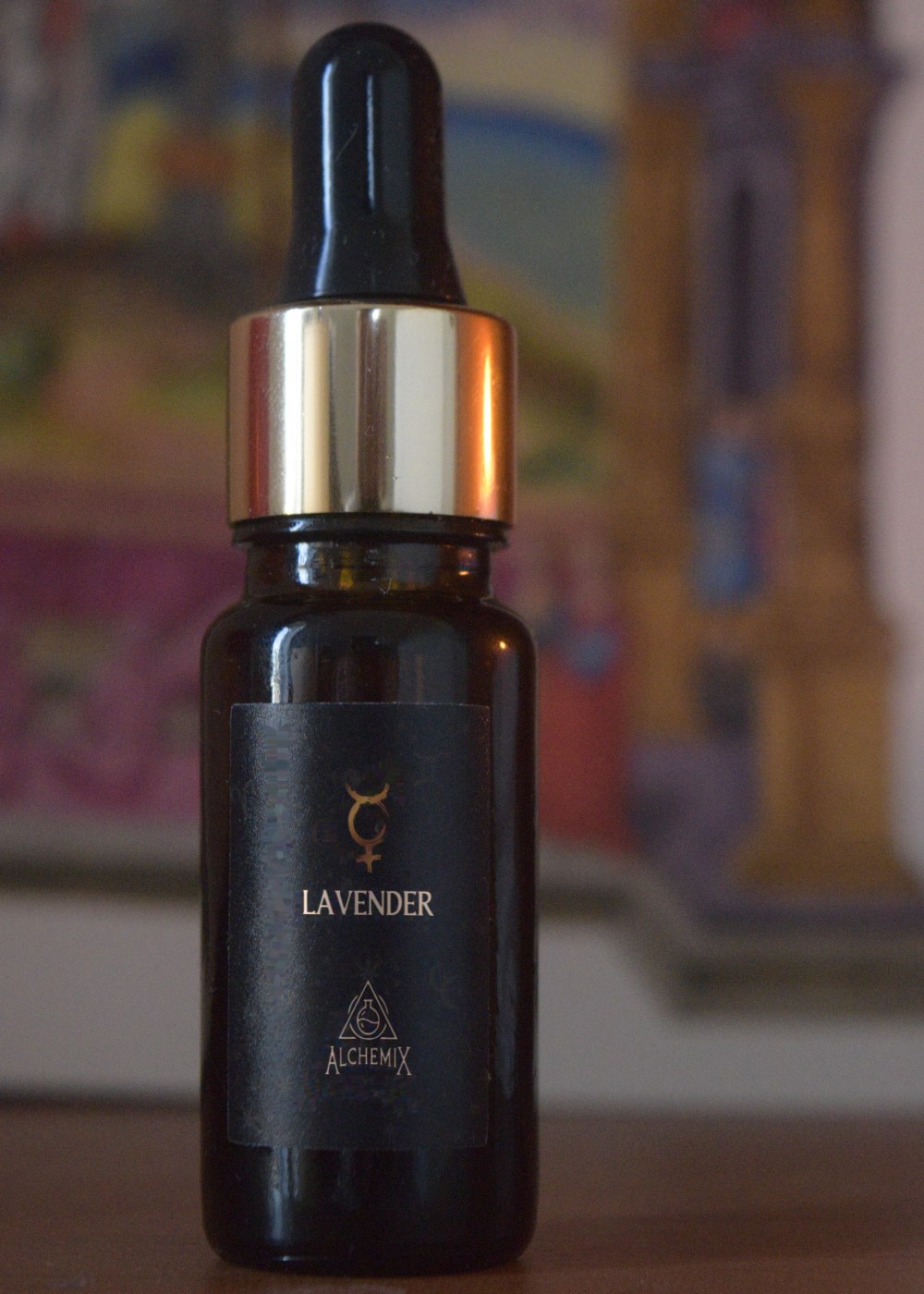
Lavender is kept in our apothecary as a spagyric tincture in the Mercurial register. You can see it here. As with everything on our shelves, it is a collector's piece: the history above belongs to the households and herbalists of the past, and we sell no remedy.