
This article belongs to our Herbarium — a library of what past traditions believed about the great herbs of the Work. It records history, not advice: we describe what herbalists of other centuries did and thought, and we make no claims of our own. Nothing here is a guide to use.
The tree that does not yield
When the northern forest thins and blackens into winter, the Scots pine stands green — needles holding, resin still moving under the bark while everything soft has died back or gone to sleep. The North built a good part of its winter identity around that stubbornness. Pine boughs were carried into the house in the darkest season as a standing proof that life outlasts the cold; the evergreen served as a promise kept annually, long before and long after any particular faith attached its own meanings to the custom. To a people who watched the light fail almost entirely at midwinter, a tree that refused to change color was not a small thing. It was the visible argument that the year would turn again.
The northern tree itself
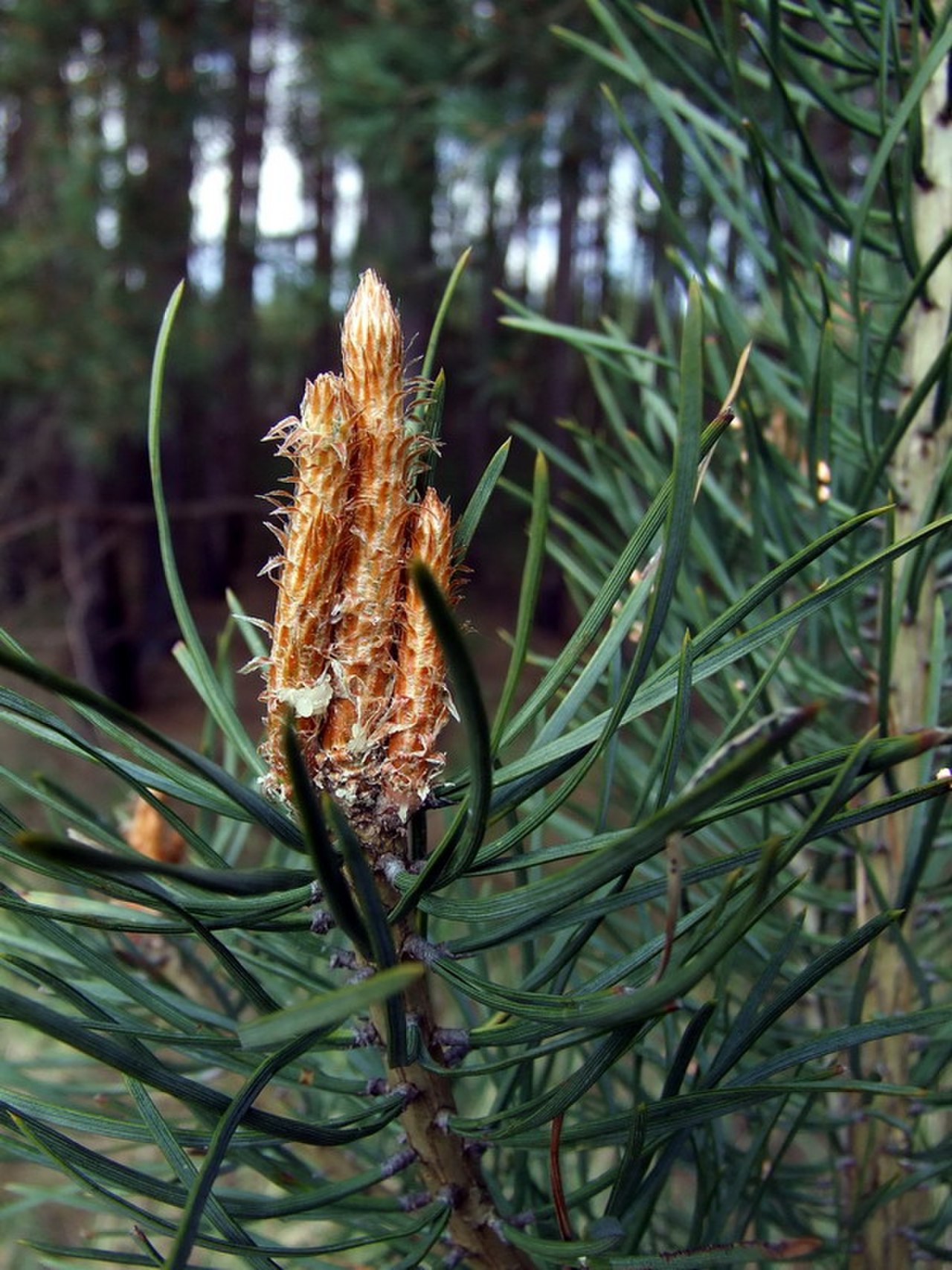
Pinus sylvestris, the Scots pine, is one of the most widely spread trees on earth, its range stretching in an unbroken belt from the Atlantic coasts of Scotland across the whole of northern Europe and Siberia to the Pacific. It is the pine of the boreal forest, and it is built for hardship: a tall, straight, long-lived conifer with a crown that rises bare-trunked and flat-topped in old age, and a bark that is one of its surest marks — flaking grey and fissured low down, but higher up peeling away in warm plates of orange and salmon-red that seem lit from within on a low winter sun. Its needles come in stiff blue-green pairs; its cones are small, hard, woody and grey. It will take root on thin sand, on bog margins, on cold granite country where richer trees fail, and it endures for centuries. Everything the northern peoples did with the pine began from this plain fact: it was the great tree that was simply there, in quantity, where they lived.
Tar, the black gold of the North
If the pine was the North's most abundant tree, its resin made it the North's most important industrial chemical. Slow-burned in great smothered earthen kilns, the resinous heartwood and stumps yielded tar — thick, black, aromatic pine tar, and from it pitch — and this was the substance that kept the northern world afloat, literally. Pine tar sealed the hulls, the seams, the rigging and the ropes of wooden ships; it waterproofed roofs and preserved timber against the rot of a wet climate. For centuries the forests of Sweden and especially Finland fed an export trade so large that "Stockholm tar" became the recognized name of the best grade across all of Europe, the standard the shipyards of other nations asked for by name. Whole rural districts organized their labor around the tar-burning season, and the black barrels went down the rivers to the coast and out to the harbors of the world. To say a port was tar-scented was to describe half the working waterfronts of the age. The tree that stood green in winter was also, in dried and burned and barreled form, the quiet foundation of northern seafaring and northern trade.
Nor did the tree's usefulness end at tar. Its clear, oozing resin was gathered and worked; its trunks, tall and straight, made the masts and the beams and the pit-props; its pitch bedded and sealed. From the same resin the northern crafts drew turpentine and the sticky pitch that caulked and preserved. In a world built almost entirely of wood, the great straight-grained pine was timber and pitch and tar and light all at once — even the resin-soaked heartwood, split into slivers, burned as a bright torch in the long dark. Little of the tree went unused, and the northern household knew every part of it.
Steam, smoke and the bath
The pine's other great domain was the bath. In the folk sauna culture of Finland and its neighbors, the pine belonged to the whole architecture and atmosphere of the ritual: the smoke saunas built and heated within timber walls, the benches and the boards, and the resinous, warmed breath of the wood filling the sealed dark room with its scent. Bathing in the North was not a luxury but a central institution of life — a place of cleansing, of birth and of laying-out, of rest after the week's labor — and the pine was woven through it. The northern folk believed the resin's warm breath opened the chest and renewed the weary spirit after the long sealed months of winter; the bath was where the body was returned to itself, and the smell of heated pine was the smell of that returning. The evergreen that promised endurance out in the snow gave, indoors, the warm resinous air of the steam room.
The bread of the hunger years
There is a harder chapter in the pine's history with its people, and it is one of the reasons the tree was held in such deep and mixed regard. In years of famine — and the North knew many — the Scots pine kept its people alive when the grain failed. Between the dead outer bark and the wood lies a thin, soft, pale inner layer, and this the Finns and the Sámi and the northern Swedes learned to harvest, dry, roast and grind into flour. Mixed with what little rye or other grain remained, it was baked into pettu, the pine-bark bread of Finland: dark, coarse, bitter, and life-saving. It was famine food and known to be so — no one ate bark bread who had a better choice — but the tree that fed its people when nothing else would earned a place in the northern memory that went beyond the merely useful. The pine was tar and ship and bath and, at the bottom of the worst years, bread.
The winter guest
Because it held its green through the dead of the year, the pine and its evergreen kin gathered around themselves the customs of midwinter. Boughs were brought indoors when the outdoor world offered nothing living to look at; the evergreen was hung and set up as the season's proof that growth was only sleeping. These customs are old and layered, older in their evergreen bones than the particular winter feasts that later gathered them up, and the pine — abundant, fragrant, and reliably green — was among the trees the northern household reached for when it wanted a piece of unkillable summer in the house at the year's lowest point. The tree of the tar kiln and the sauna was also the tree of the midwinter room.
The Folklore of the Scots Pine
Beyond the tar kiln and the bathhouse, the pine gathered a body of story that had nothing to do with trade. Where a tree keeps its colour through a season that kills everything else, folk imagination reaches for meaning, and the North duly made the pine a keeper of the year's secret. Old country belief set the evergreen at the threshold of the turning seasons — the tree that knew how to survive, and so the tree to keep close when survival was in doubt. It was reckoned a tree of endurance and quiet power, honoured at the solstice and planted near the dwelling, and the folk who told these tales grasped an idea the alchemists would later formalise: that a plant's outward habit betrays its inward virtue. What is a spagyric tincture? begins from exactly that intuition.
The Evergreen of Immortality: Pine Symbolism
Because it would not die back, the pine became one of the old world's plainest emblems of immortality and rebirth. The needle that stayed green was read as the soul that outlasts the body, the life that sleeps rather than ends; boughs were set about in the dark of the year as a token that green would return. The Mediterranean world wove the same thread differently: the thyrsus of Dionysus, the god's wand of fennel and ivy, was tipped with a pine cone — the evergreen's seed crowning the staff of vine and revel, life sealed at the summit of the rod. From the boreal forest to the Greek procession the meaning held steady. The pine was the tree that argued, in green, against the finality of winter, and the folk who carried its boughs carried that argument indoors with them.
Pine in Purification and Protection
The resinous smoke of pine was, across much of the old world, held to be a cleanser. Burned at the solstice and at the turning-points of the year, it was believed to sweeten a space and drive out what did not belong; a Scottish tale tells of pine set alight and carried through a house to purge a room of its ghosts, the smoke walking the walls until the unquiet was gone. In folk reckoning the evergreen was a tree of protection and of binding — its wood and cones carried or set at the door to guard the threshold, its scent thought to hold the line against ill-wishing. None of this was medicine and none of it chemistry; it was the old grammar of purification, in which a fragrant, unkillable tree stood for a household made clean and safe against the dark.
Saturn's evergreen
The hermetic tradition sets the pine under Saturn, and the fit is exact. Saturn is the planet of time, of endurance, of structure and boundary and the long patient labor that outlasts seasons — and here is the tree that holds its form and its green through the very season that dissolves everything else, that lives for centuries on cold thin ground, that gives up its virtues slowly through fire and long burning rather than in any quick bloom. Its signature is the inner spine that does not bend: the capacity to keep the sap moving in the cold, to draw endurance up from a deep root, and to refuse the temptations of haste. The tree that would not yield to winter, that fed and floated and warmed the North across its hardest centuries, wears the Saturnine virtue on its evergreen back.
Pine and the Planet Saturn
The hermetic astrologers set the pine beneath Saturn, and no assignment sits more naturally. Saturn is the planet of time and boundary, of the long labour that outlasts the season, of the elder and the crone who keep what the young forget — and here is the tree that holds its green through the very months that undo everything softer, that lives for centuries on cold thin ground, that yields its virtue slowly through fire and patience rather than in any quick bloom. Its planetary signature is the spine that does not bend: endurance drawn up from a deep root, the discipline to keep the sap moving in the frost. The pine was named Saturn's own evergreen — the crone's tree, the keeper of the boundary, the green that time cannot strip away.
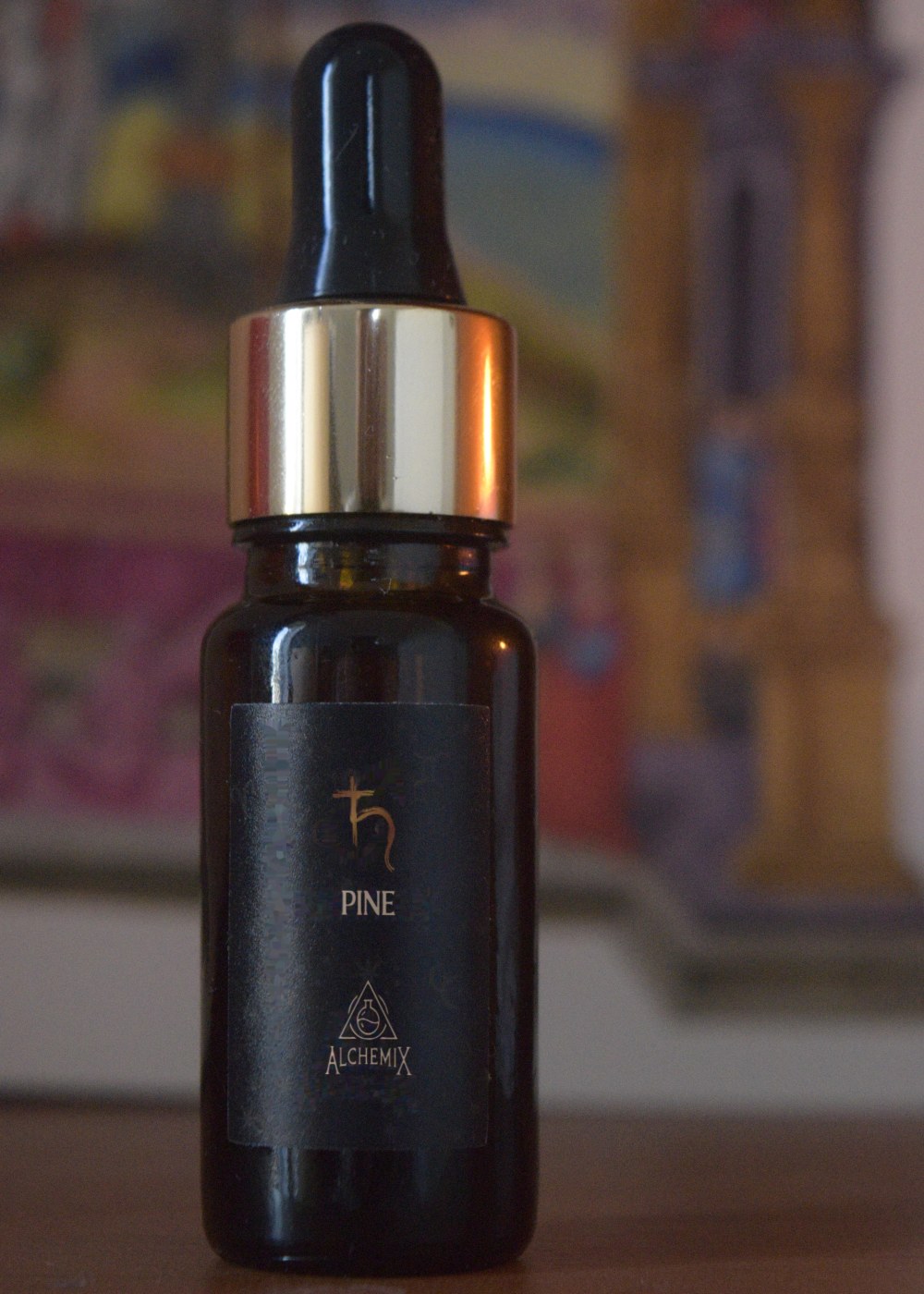
Pine is kept in our apothecary as a spagyric tincture in the Saturnian register. You can see it here. As with everything on our shelves, it is a collector's piece: the history above belongs to the peoples of the North, and we sell no remedy.