
This article belongs to our Herbarium — a library of what past traditions believed about the great herbs of the Work. It records history, not advice: we describe what herbalists of other centuries did and thought, and we make no claims of our own. Nothing here is a guide to use.
The name of the horse
Sanskrit rarely wastes a syllable. Ashva is horse; gandha is smell — the root that smells of the stallion, and, the tradition winked, confers the stallion's strength. It is one of those plant names that carries its whole reputation in two words: dig the fresh root from the dry Indian earth and it does give off a faintly sharp, animal, horse-like odor, and from that plain sensory fact the old physicians built a doctrine. A thing that smelled of the stallion, they reasoned, would lend something of the stallion's vigor. The name is at once a description and a promise, and the tradition never troubled to separate the two.
The plant behind the name
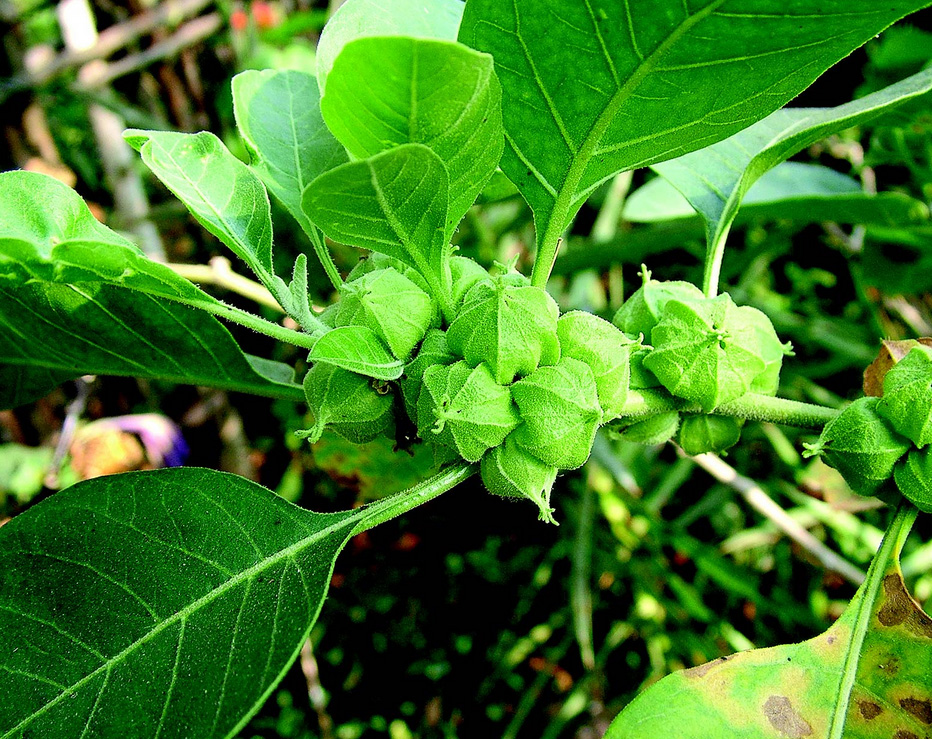
Ashwagandha is Withania somnifera, a modest woody shrub of the nightshade family — cousin, therefore, to the tomato, the potato, and the deadly nightshades, though far gentler than that dark kinship might suggest. It grows knee-high and grey-green across the dry, stony, sun-punished country of India, the Middle East and North Africa, thriving where richer plants give out. Its small greenish-yellow flowers give way to a scarlet berry no bigger than a currant, each one hidden inside a papery, inflated husk — a lantern of a calyx that veils the fruit until it is ripe. The English herbalists who met it later called it the Indian winter cherry, for that lantern-wrapped red berry that persists into the cold season, and the older name poison gooseberry for its nightshade lineage. But it was always the root, not the berry, that the Indian physicians prized. And the botanical name completes the portrait the Sanskrit began: somnifera, the sleep-bringer.
The great rasayana
To understand what ashwagandha meant, one has to understand the shelf it sat on. Classical Ayurveda — the medical tradition set down in the great Sanskrit compendia of Charaka and Sushruta and elaborated over centuries — organized its materia medica into classes, and among the most exalted was the rasayana: the rejuvenators, the restorers, the herbs held to renew what age and strain and illness had worn away. Rasayana was less a cure for a named ailment than an entire branch of the art, concerned with vitality, longevity, and the replenishment of the body's deep reserves. To be counted a rasayana was to be counted among the aristocracy of the Indian pharmacopoeia, and ashwagandha stood in the first rank of that class for something like three thousand years.
Rasayana was also, in the classical texts, a discipline with its own settings and regimens. The compendia describe two broad ways of undertaking a course of rejuvenation: the demanding indoor method, in which the seeker withdrew into a specially built hut, sheltered from sun and wind and the ordinary traffic of life, to be renewed in seclusion; and the gentler outdoor method, carried on while still going about one's days. Rasayana herbs like ashwagandha belonged to this whole architecture of renewal — not casual remedies but the materials of a considered practice aimed at the long restoration of a worn body. To place a root within that discipline was to place it very high indeed.
It was, in that tradition, the root the physicians reached for when reserves were spent: after illness had burned through a body, after long labor or grief had emptied it, in the thinness of old age, and in the wreckage of broken sleep. It was believed to return strength to the spent, steadiness to worn nerves, and deep rest to the sleepless. The tradition insisted on a distinction it thought essential — ashwagandha was held to be a restorer and not a stimulant, a root that gave strength back slowly and by night rather than borrowing it loudly from tomorrow. Where a stimulant whipped a tired horse forward, ashwagandha, in the old belief, fed and stabled it. That the same shrub was called both the stallion's root and the sleep-bringer was no contradiction to the physicians who used it: strength and deep rest, in their reading, were two faces of the same replenishment.
The many names of one root
Few plants have gathered as many names, and each is a small window onto how a culture met it. To Sanskrit it was ashwagandha, the horse-smelling root, and also vajigandha, another word joining horse and scent. In the household Ayurveda of India it acquired affectionate and grand titles alike — a byword for the herb of strength and steadiness. The West, meeting it far later, named it soberly and by appearance: Indian winter cherry for the red berry in its winter lantern, poison gooseberry for its nightshade kin. Botanists fixed it at last as Withania somnifera, honoring the sleep in the species name while the folk names remembered the horse. A plant, in short, that the strong-bodied traditions of the East knew for vigor and the cataloguing traditions of the West knew for its lantern-fruit and its drowsy name — two readings of one grey shrub of the dry country.
The wrestler's root
Ashwagandha's association with bodily strength was not only medical; it was, in places, athletic and frankly popular. In the folk and household use of the Indian subcontinent the root carried a lasting reputation as a builder of the frame and the wind — the sort of thing associated with the wrestler, the laborer, the one whose living was made by the body. The stallion in the name was taken at its word: this was held to be a root for those who needed the strength of a working animal, and it kept that plain, muscular reputation alongside its higher standing among the classical rasayanas. Grand in the compendia of Charaka, it remained homely and practical in the village — a root you gave to the depleted and the overworked, the old and the sleepless, on the strength of a name that promised the horse.
The root also traveled. Beyond the reach of Sanskrit Ayurveda proper, ashwagandha found a place in the neighboring Unani tradition — the Greco-Arabic system of medicine long practiced across the Indian subcontinent — which met the plant on its own terms and kept it in its own materia. Wherever the shrub grew, from the dry country of India westward through the Middle East and North Africa, local healers seem to have arrived at broadly kindred convictions about it: a root for the worn, the wasted and the aged. It is one of those plants whose reputation is remarkably consistent across the traditions that handled it, as if the grey shrub of the stony ground told everyone who dug it much the same story.
Sun in the fruit, Moon in the leaf
The plant speaks with two voices, and assigning its planet takes listening. The scarlet berry and the shrub's love of hot, dry, sun-hammered earth argue for the Sun — the register of vitality and open strength. But the silver-downed leaves, the fruit kept veiled and hidden in its papery lantern, the preference for the root over the flaunted flower, and above all the sleep written into the very species name argue for the Moon — the register of night, of what is hidden, of quiet inward replenishment. The tradition of our own apothecary weighed the two and set her down at last under the Moon: not for the stallion's daylight vigor but for the older half of her reputation — the deep restoration by night of what the day has taken, the strength that returns in the dark and in silence.
The Meaning of Ashwagandha: The Smell of Horse
The name unfolds like a riddle already solved. Ashwa is the horse; gandha is smell — and the freshly dug root does carry a sharp, warm, animal odour that the old namers heard as the smell of a stallion. But Sanskrit let the word ring twice. To smell of the horse was, in the same breath, to be thought to carry something of the horse: its strength, its speed, its untired stride. The name was a description that shaded, without ever announcing the turn, into a promise. Later Sanskrit kept a companion word, vajigandha, "the scent of the steed," lest the point be missed. Whatever the physicians of old India believed the root could do, they hung the whole of it on that one plain fact of the nose — a plant known, first and forever, by the animal it was said to smell of.
The Stallion's Root: Folklore of Strength and Horse-Dreams
The horse in the name galloped on into folklore. Old tradition held that the root lent the strength of a horse to those who had spent their own, and a gentler strand of the lore told that it set wild steeds running through the sleeper's dreams — the horse a figure of vigour and of freedom both, arriving by night. In the household herbalism of India the root was reached for in old rites of stability and vitality, and, some said, for the cleansing and steadying of the spirit's own field. All of this belonged to belief and to story, told in the past tense of every tradition that kept the plant; it is set down here as folklore and no claim of our own. The stallion's root was, above all, a thing people told stories about — and the stories, like the name, always cantered back to the horse.
Ashwagandha Among the Nightshades
Here is the botanical surprise the folklore rarely paused on: ashwagandha is a nightshade. Withania somnifera belongs to the Solanaceae, the same sprawling family as henbane and deadly nightshade — plants the old world hedged with dread and drew into its darkest lore. Yet the horse-smelling root somehow escaped the veil of superstition that fell over its kin. Where henbane became the witch's herb and belladonna the poisoner's, ashwagandha kept an honest, homely name, called for a working animal rather than for the gallows or the sabbat. It is a curious accident of reputation: two plants from one family, one shrouded in fear and one trusted at the hearth — the difference owing less to the plants themselves than to the stories the centuries happened to tell about them.
Ashwagandha and the Moon
Two lights compete for the plant, and our apothecary chose the fainter. The scarlet berry and the shrub's love of sun-hammered ground might have argued for a solar reading; but the older, deeper half of the plant's lore points to the Moon. The silver-downed leaf, the fruit kept veiled in its papery lantern, the horse that comes galloping only in dreams, and above all the sleep written into the very species name — somnifera, the sleep-bearer — all belong to the lunar register of night and of what is hidden. Under the Moon we set her, for the horse of the dream rather than the horse of the field. Those who wish to know how such a reading of a plant's nature becomes a matter of spirit and salt can turn to What is a spagyric tincture?.
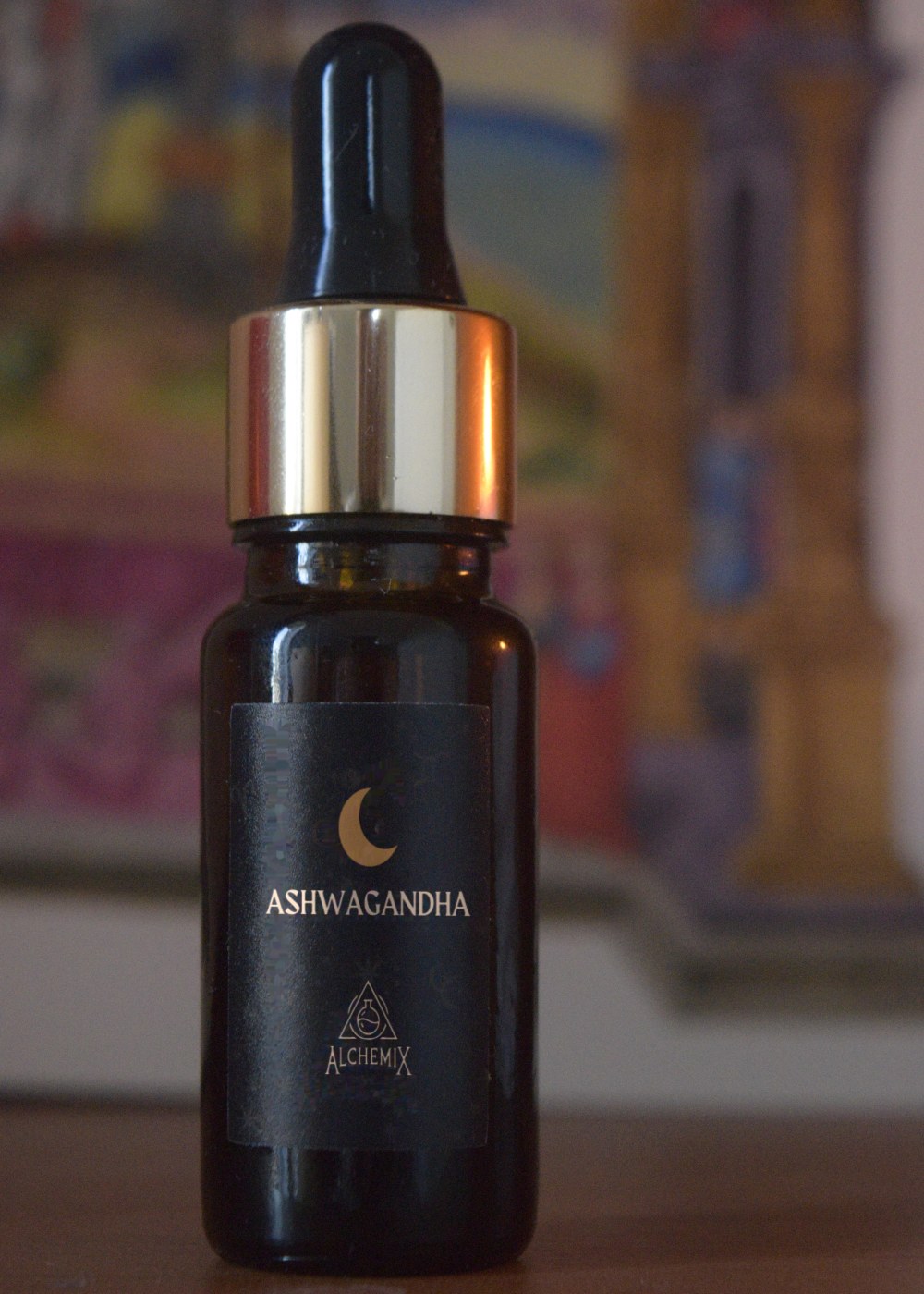
Ashwagandha is kept in our apothecary as a spagyric tincture in the Lunar register. You can see it here. As with everything on our shelves, it is a collector's piece: the history above belongs to the physicians of old India, and we sell no remedy.